IUI Treatment in Dubai
A Simpler Starting Point on the Road to Pregnancy

Here’s a question worth asking before anything else: does your situation actually need IVF, or would something simpler do the job first? IUI treatment in Dubai exists precisely for that middle ground, cases where conception hasn’t happened naturally, but the underlying biology doesn’t call for a full IVF cycle either.
IUI, or intrauterine insemination, places specially washed and concentrated sperm directly into the uterus around the time of ovulation. No egg retrieval. No embryo culturing. Just a more direct route for sperm to reach an egg than intercourse alone might achieve, timed with real precision instead of guesswork.
It’s not the right answer for every situation, and we’ll be upfront about that throughout this page. But for a meaningful number of couples, it’s the sensible first step, less invasive, less costly, and often enough to get the job done.
What Exactly Is IUI, and How Is It Different From IVF?
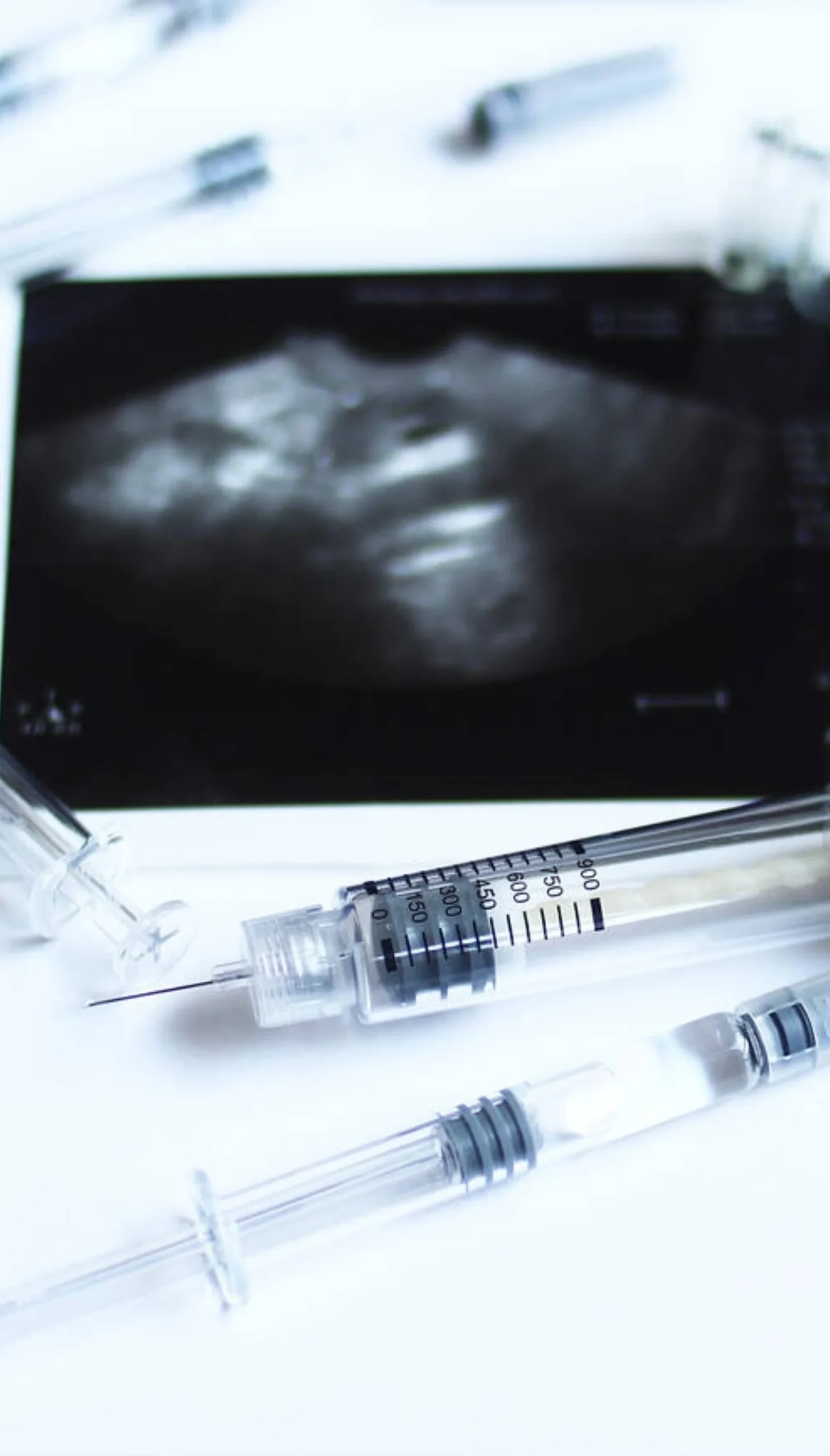
IUI skips the lab entirely. A semen sample is collected, washed to concentrate healthy, motile sperm, then inserted directly into the uterus using a thin catheter, timed to coincide with ovulation. Fertilisation still happens the natural way, inside the body, not in a dish.
IVF, by contrast, retrieves eggs surgically, fertilises them in a lab, and transfers a resulting embryo back into the uterus. It’s a fundamentally more involved process, medically and logistically, which is exactly why IUI tends to come first when it’s a reasonable option.
| Consideration | IUI | IVF |
|---|---|---|
| Where fertilisation happens | Inside the body | In the lab |
| Egg retrieval required? | No | Yes |
| Typical cost | Lower | Higher |
| Physical intensity | Minimal | Moderate to significant |
| Best suited for | Mild male factor, unexplained infertility, ovulatory issues | More complex or severe fertility factors |
| Per-cycle success rate | Lower | Higher |
Neither option is objectively “better.” They solve different problems, and the right one depends entirely on what’s actually going on with you.

Am I a Good Candidate for IUI?
Good candidates for IUI tend to share a few things in common: reasonably open fallopian tubes, a decent ovarian reserve, and a semen analysis that’s mildly reduced rather than severely compromised. It’s also a common first step for couples dealing with unexplained infertility, where no clear cause has been identified but conception simply isn’t happening on its own.
It works less well, and honestly, we’ll tell you this directly rather than let you find out after a few failed attempts, when tubes are blocked, sperm quality is significantly impaired, or when a woman’s age and ovarian reserve mean time is a more pressing factor. In those situations, IVF or ICSI usually gives a considerably better shot per cycle, and going straight there can actually save time, money, and disappointment rather than cost you.
One point worth being clear about for patients researching this in the UAE specifically: treatment here uses the couple’s own sperm and eggs only, donor sperm isn’t a legal option for IUI in this jurisdiction, consistent with UAE Federal Law No. 7 of 2019 governing assisted reproduction.
If a broader conversation about sperm quality is part of your picture, it’s worth reading about male infertility treatment options alongside this page, since IUI candidacy often hinges on exactly those numbers.

What Actually Happens During Treatment?
Cycle monitoring
Ultrasounds and bloodwork track your natural cycle or, if needed, a mild stimulation protocol using oral or injectable medication to encourage one or two mature follicles.
Ovulation trigger
Once a follicle is ready, a trigger injection is given to time ovulation precisely, usually 24 to 36 hours later.
Sperm preparation
A sample is collected and processed in the lab, washed to separate healthy, motile sperm from seminal fluid and lower-quality cells.
Insemination
A thin, flexible catheter delivers the prepared sample directly into the uterus. It takes a few minutes, and most patients describe it as similar to a Pap smear, brief discomfort at most.
Luteal support
Progesterone support may be prescribed to help the uterine lining stay receptive in the days following insemination.
The wait
A pregnancy test roughly two weeks later confirms whether the cycle worked, and if it didn’t, that information still helps shape what comes next.

Why Do Some Cycles Work and Others Don't?
This is worth addressing plainly, because IUI success rates are genuinely lower per cycle than IVF, typically somewhere in the range of 10 to 20 percent depending on age and diagnosis, and that’s normal, not a sign something’s wrong. Timing, sperm quality on the day, and simple biological chance all play a role that no amount of monitoring can fully control for.
What matters more than any single cycle is the cumulative picture. Most clinics recommend trying IUI for three to four cycles before reassessing, since success rates across several attempts add up meaningfully, and if it isn’t working by then, that’s useful information pointing toward IVF or ICSI rather than a reason to keep repeating the same approach indefinitely.

Why Choose Us for IUI in Dubai?
Choosing where to have this done matters more than people assume, since timing precision and honest guidance are really what separate a well-run IUI programme from a mediocre one. Here’s what that actually looks like in practice:
Honest escalation advice
We’ll tell you directly if IUI isn’t likely to work for your situation, rather than running cycles that were unlikely to succeed from the start.
Precise cycle timing
Ultrasound and hormone monitoring pinpoint ovulation accurately, which is the single biggest lever in IUI success.
On-site sperm processing
Same-day sample preparation in our own lab, no third-party delays.
Clear, upfront cost per cycle
No ambiguity about what a single IUI attempt costs before you commit to it.
A natural next step to IVF, if needed. If IUI doesn’t work, your file, history, and diagnostic results carry straight into an IVF and ICSI conversation without starting from zero.
FAQ
How many IUI cycles should I try before considering IVF?
Most specialists recommend three to four cycles before reassessing. If pregnancy hasn’t occurred by then, moving to IVF or ICSI is usually the more effective next step.
Is IUI painful?
Not typically. Most patients describe mild cramping similar to a Pap smear, lasting only a few minutes, with no need for sedation or recovery time.
What are the success rates of IUI per cycle?
Per-cycle success generally ranges from 10 to 20 percent, depending on age, diagnosis, and whether medication is used to stimulate follicle development.
Can IUI be done with a natural cycle, without medication?
Yes. Natural-cycle IUI relies on tracking your body’s own ovulation without stimulation drugs, though many clinics use mild medication to improve timing accuracy.
How soon can I take a pregnancy test after IUI?
Around two weeks after insemination. Testing earlier risks an inaccurate result, since hormone levels need time to rise to a detectable level.

Book an Appointment
Ready to Begin Your Journey?
If you’re seeking the Best IVF Clinic in Dubai for expert treatment with personalized care, you’re in the right place. Consult with our fertility specialists today—let’s map your path to parenthood together.