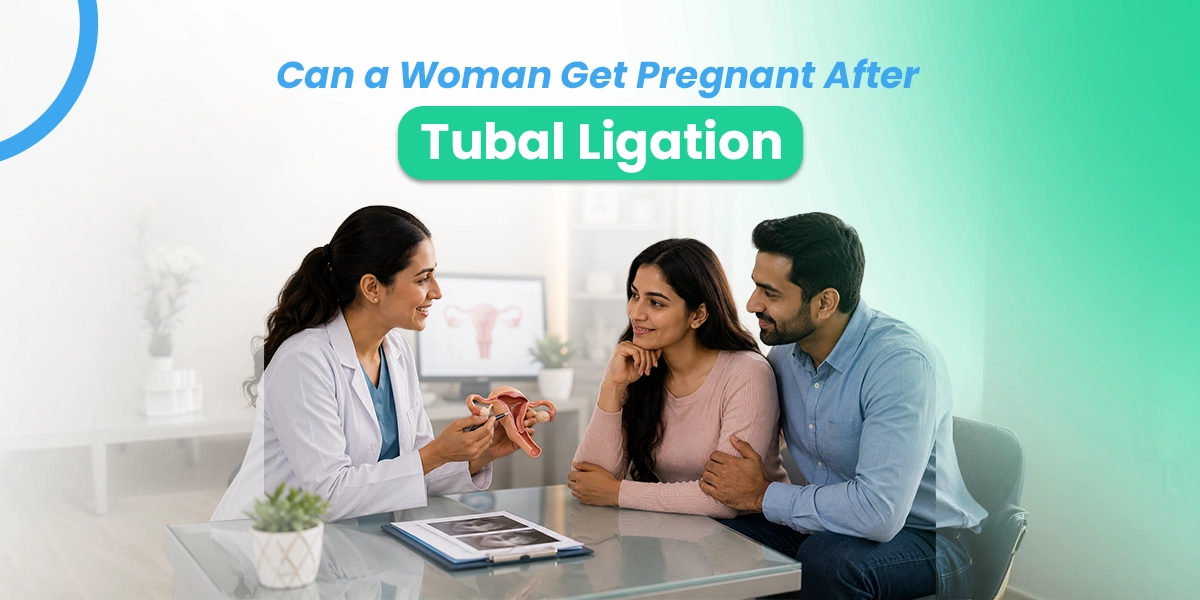
Life doesn’t always follow the plan we made for ourselves years ago. Many women who underwent tubal ligation — often after completing their families — later find themselves in a new chapter: a second marriage, a new partner, and a renewed desire to become a mother. If that sounds familiar, you’re not alone, and you deserve clear, honest answers.
So, can you get pregnant after tubal ligation? The short answer is yes — but not without medical help. Here’s everything you need to know about your options, what to realistically expect, and how the team at Best Life Fertility Centre in Dubai can guide you through the process.
What Is Tubal Ligation?
Tubal ligation — commonly called “getting your tubes tied” — is a surgical procedure in which the fallopian tubes are cut, tied, or sealed to prevent eggs from travelling to the uterus for fertilisation. It is considered a permanent form of contraception, typically chosen by women who have completed their families.
However, circumstances change. Divorce, the loss of a spouse, or a new partnership can shift a woman’s desires entirely. A peer-reviewed study published on PubMed (NCBI) found that between 20–30% of women who have undergone tubal ligation later regret their decision and seek to restore their fertility — through either reversal surgery or IVF.
If you find yourself in that position, know that you are not alone — and that medicine has moved forward significantly to support women who want a second chance at motherhood.
Is Pregnancy Possible After Tubal Ligation?
Yes — but natural conception is no longer possible once the fallopian tubes have been blocked, since eggs cannot travel from the ovaries to the uterus for fertilization. However, two medically proven paths can make pregnancy a reality:
1. Tubal Ligation Reversal (Surgical)
A microsurgical procedure that reconnects the severed portions of the fallopian tubes. When successful, it can restore the ability to conceive naturally.
Key considerations:
- Requires sufficient healthy tube length remaining after the original procedure
- Success rates range from 30–80%, highly dependent on age, the type of ligation performed, and how much tube remains
- Carries a higher risk of ectopic (tubal) pregnancy compared to IVF
- Generally not recommended for women over 40 or those with other fertility factors
2. In Vitro Fertilization (IVF)
IVF bypasses the fallopian tubes entirely. Eggs are retrieved directly from the ovaries, fertilized in the laboratory, and the resulting embryo is transferred directly into the uterus.
Key considerations:
- The most commonly recommended option for women post-tubal ligation
- Does not require functioning fallopian tubes
- Success rates of 50–70%+ depending on age and clinic
- Lower risk of ectopic pregnancy than reversal surgery
- Suitable even for women over 35, with options including egg freezing
For most women — particularly those over 35 — IVF is the more reliable, safer, and more time-efficient path to pregnancy after tubal ligation.
Tubal Reversal vs. IVF: A Side-by-Side Comparison
| Factor | Tubal Reversal | IVF |
|---|---|---|
| Requires functioning tubes | Yes | No |
| Suitable after age 35 | Often limited | Yes |
| Risk of ectopic pregnancy | Higher | Lower |
| Time to potential pregnancy | Longer | Faster (once eggs retrieved) |
| Success rate (general) | 30–50% | 50–70%+ |
| Repeat attempts possible | Rarely | Yes, using frozen embryos |
Starting Over: A Common and Courageous Decision
It’s worth addressing the emotional reality many women face when asking about getting pregnant after tubal ligation in the context of a second marriage.
You may be asking yourself: Is it too late? Will people judge me? What if it doesn’t work?
These are completely valid feelings. But wanting to build a family with a new partner is not selfish — it’s human. Many couples in second marriages successfully conceive through IVF, and Dubai’s fertility specialists treat this journey with the respect and confidentiality it deserves.
There is no expiration date on the desire to become a mother.
Why Choose Best Life Fertility Centre in Dubai?
Best Life Fertility Centre is a specialist fertility clinic based in Sharjah/Dubai, UAE, with an experienced multidisciplinary team including IVF specialists, embryologists, and reproductive surgeons. For women exploring pregnancy after tubal ligation specifically, the clinic offers:
- Personalised fertility assessment — including AMH levels, antral follicle count, and full hormonal panel — to determine the best treatment path for your specific history
- Advanced IVF and ICSI protocols tailored to complex fertility backgrounds
- Genetic screening options (PGT-A) to maximise the chance of a healthy embryo transfer
- Emotional and wellness support — particularly valuable for women navigating fertility treatment alongside the emotional weight of a new relationship or previous loss
- Multilingual team and a discreet, female-focused environment
- EIAC-accredited laboratory and clinical standards
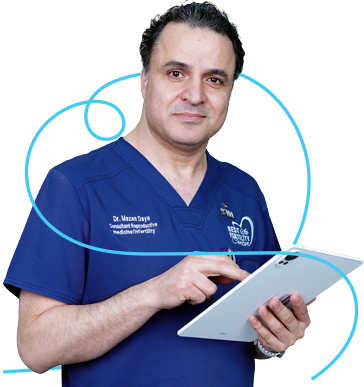
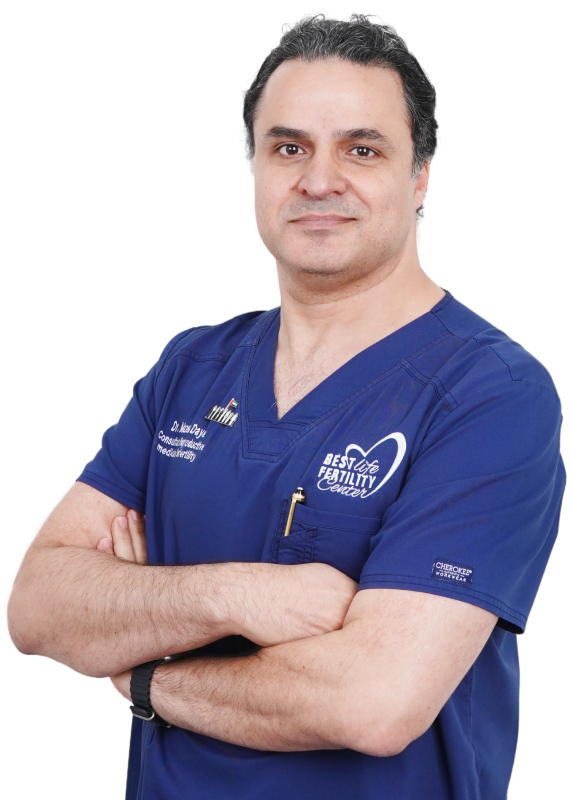
The clinic’s medical director, Dr. Mazen Dayeh, brings over two decades of experience in reproductive endocrinology and infertility, while Dr. Carolina Arboleya — an IVF specialist trained in Madrid with expertise in endometriosis and unexplained infertility — adds further depth to the specialist team.
What to Expect: Your Journey at Best Life Fertility Centre
Step 1 — Initial Consultation & Assessment A comprehensive fertility workup covering blood tests (AMH, FSH, LH, estradiol), pelvic ultrasound, and your partner’s semen analysis. This tells the team your ovarian reserve and overall reproductive health.
Step 2 — Treatment Planning Based on your age, tubal ligation method, and fertility results, your specialist will recommend whether IVF or reversal surgery is the right path. Most cases with a history of tubal ligation are directed toward IVF.
Step 3 — Ovarian Stimulation & Monitoring Hormonal injections stimulate your ovaries to produce multiple eggs. The team monitors follicle growth closely via regular ultrasound scans.
Step 4 — Egg Retrieval & Fertilisation Eggs are collected under light sedation and fertilised with your partner’s (or donor) sperm in the embryology lab. Embryo development is monitored over 3–5 days.
Step 5 — Embryo Transfer & Pregnancy Test The best-quality embryo is transferred into your uterus. A pregnancy blood test follows approximately 10–14 days later.
Throughout each stage, the clinical and wellness team at Best Life Fertility is with you — medically and emotionally.
Busting Common Myths
“Tubal ligation is completely irreversible.” Not true. While it is intended to be permanent, both reversal surgery and IVF offer genuine pathways to pregnancy.
“I’m over 35 — IVF won’t work for me.” Many women in their late 30s and early 40s achieve successful pregnancies through IVF. Your ovarian reserve, assessed via AMH testing, is a far more reliable predictor than age alone.
“It’s too complicated because I’ve already had children.” Secondary fertility treatment — pursuing a pregnancy after previously having children — is one of the most common reasons women approach fertility clinics. It is well understood and well-supported.
“IVF always fails the first time.” Success rates vary, but with optimal embryo quality and a well-prepared uterine lining, many women achieve pregnancy on their first or second transfer.
Fertility Care in Dubai: Why Location Matters
Dubai and the wider UAE offer world-class fertility services within a well-regulated medical framework. For women pursuing pregnancy after tubal ligation specifically, this matters because:
- UAE fertility clinics operate under strict licensing (DHA/MOH/HAAD regulations)
- Treatment timelines are significantly shorter than in many countries
- The cultural sensitivity to second marriages and blended family-building is well understood by experienced UAE fertility teams
- International patients are well accommodated, with minimal wait times
The Bottom Line
Getting pregnant after tubal ligation is genuinely possible with the right medical support. Whether through tubal reversal surgery or — more commonly — through IVF, women who once thought this chapter was closed are starting families every day.
If you are in the UAE and ready to explore your options, Best Life Fertility Centre in Dubai offers the specialist expertise, compassionate care, and advanced technology to help you take the next step with confidence.
You chose to start over. Now let the right team help you move forward.
Book Your Consultation at Best Life Fertility Centre →
Frequently Asked Questions
Q1: Can you get pregnant after tubal ligation without IVF?
Natural pregnancy is not possible after tubal ligation. Tubal reversal surgery can restore natural fertility, but IVF is generally the more reliable option.
Q2: How successful is IVF after tubal ligation?
IVF success rates after tubal ligation are comparable to standard IVF — typically 50–70%, depending on the patient’s age and ovarian reserve.
Q3: What is the best age to try IVF after tubal ligation?
The earlier, the better. Women under 35 have the highest success rates, though IVF can be effective well into the early 40s with appropriate evaluation.
Q4: Is tubal reversal or IVF better after a second marriage?
IVF is usually recommended. It doesn’t depend on tube condition, has lower ectopic pregnancy risk, and allows for embryo freezing for future attempts.
Q5: How long does the IVF process take at Best Life Fertility Centre in Dubai?
A full IVF cycle typically takes 4–6 weeks from stimulation start to embryo transfer, with results confirmed within two weeks of transfer.