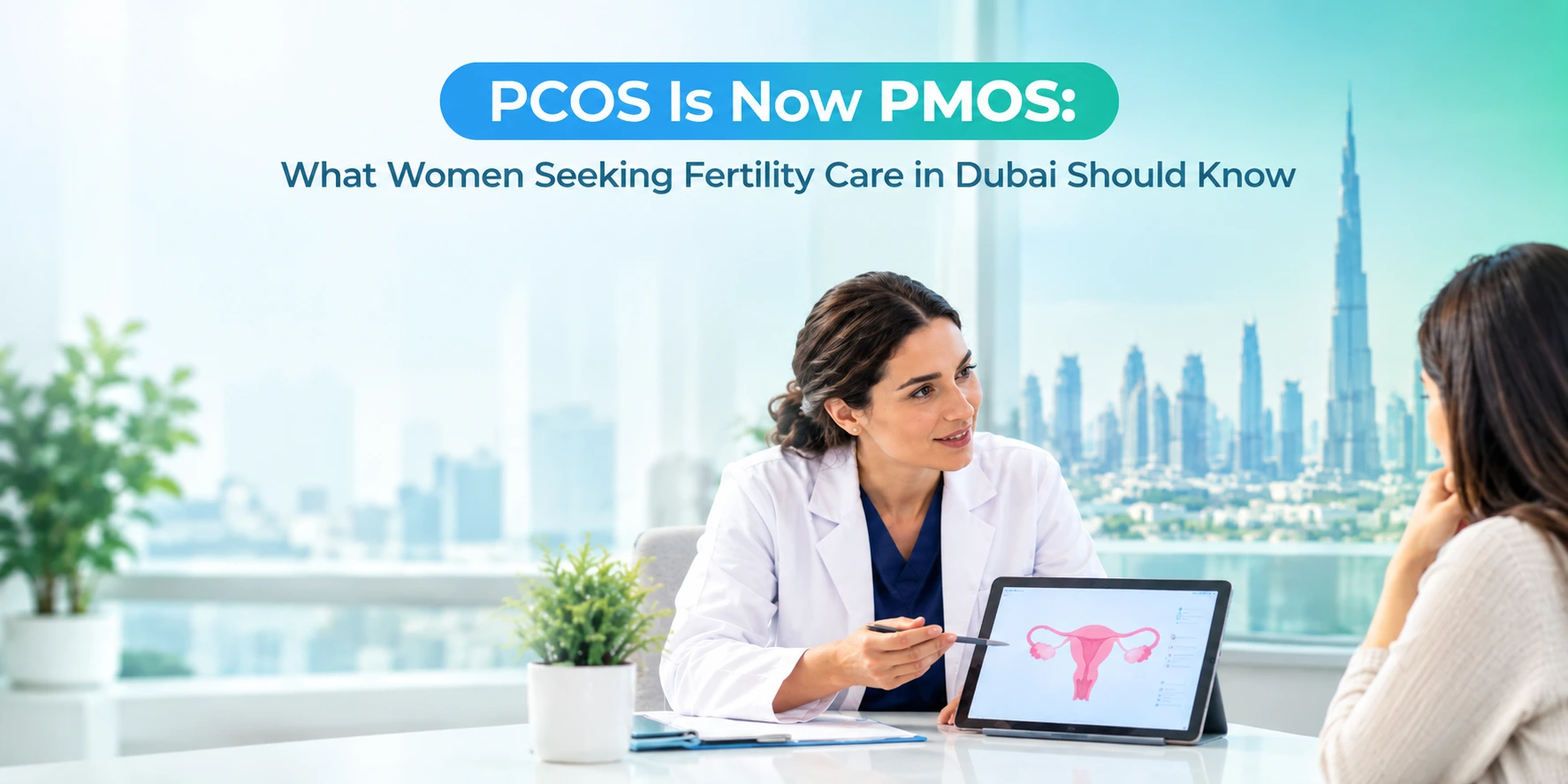
Quick Answer: PCOS was officially renamed Polyendocrine Metabolic Ovarian Syndrome (PMOS) in May 2026 following an international consensus published in The Lancet on May 12, 2026. The condition itself has not changed. If you were diagnosed with PCOS, that diagnosis still stands, and you do not need to repeat your tests or restart treatment simply because the name has changed. What has changed is how the condition is described. The new name better reflects its hormonal and metabolic features alongside its effects on the ovaries. For women trying to conceive, the important question remains whether the condition is affecting ovulation or other aspects of fertility.
If you have PCOS and are trying to get pregnant, you may have recently heard the term PMOS. That can be confusing, especially if you have already been diagnosed, had fertility tests or started treatment. So, has PCOS been replaced by a completely different condition? Do you need new tests? And does this change anything if you are considering IVF? Not really. The name has changed, but the condition you were diagnosed with has not suddenly become something else.
Why Was PCOS Renamed PMOS?
The main reason for the change is that the old name did not fully describe everything involved in the condition. PCOS has been used for many years, but the name can make it sound as though the ovaries are the only part affected. In fact, the condition can involve hormonal, metabolic and reproductive changes too.
The new name, Polyendocrine Metabolic Ovarian Syndrome, is meant to reflect this more clearly. The terminology was updated following an international consensus involving medical and patient organisations. It does not mean that a new disease has been identified or that patients suddenly need a different type of treatment. The change is in how it is understood and described.
I Already Have a PCOS Diagnosis. What Happens Now?
If you were diagnosed with PCOS before the name change, your diagnosis still matters.
You do not need to start over simply because your doctor, a new medical report or an article now uses the term PMOS. Your previous test results, medical records and treatment history can still be used when planning your care.
You may also see both terms for some time. Older reports will naturally continue to say PCOS, while newer resources may use PMOS or write “PMOS, formerly PCOS.” So, if you see PMOS for the first time, there is no need to assume that something has changed with your health.
What Does PMOS Mean If You Are Trying to Get Pregnant?
For women trying to conceive, the name itself is not the important part. What matters is whether the condition is affecting ovulation or there are other factors making pregnancy more difficult.
Some women with PCOS/PMOS do not ovulate regularly. This can make it harder to conceive without treatment. Others may have regular ovulation and become pregnant without fertility treatment. That is why a fertility assessment looks at the individual woman rather than making decisions based only on the diagnosis.
Your doctor may look at your ovulation, menstrual history, ovarian reserve and other factors that can affect fertility. Your partner’s fertility may also need to be considered.
“When a woman with PCOS comes to us because she is having trouble getting pregnant, the name of the condition is not what changes her care. What matters is understanding her ovulation, fertility history and what may be affecting her chances of pregnancy.”
– Dr. Mazen Dayeh, Reproductive Medicine and Infertility Consultant
Will Fertility Treatment Change Because of the Name?
No. The change from PCOS to PMOS does not mean that your fertility treatment needs to change. If you were already receiving treatment for PCOS, there is no reason to stop or restart it simply because the terminology has been updated. Your doctor will continue to look at what is actually affecting your fertility and decide whether any changes are needed.
Depending on your situation, treatment may include ovulation support, timed intercourse, IUI, IVF or ICSI. The choice depends on factors such as your age, ovulation, ovarian reserve, fertility history and whether there are other factors affecting conception. So, if your medical report now says PMOS instead of PCOS, the name itself does not change your treatment plan.
What If You Are Planning IVF?
If you are already considering IVF, the change in terminology does not mean that you need to repeat your entire fertility assessment. Your specialist will still look at the factors that matter when planning IVF treatment, including your ovarian reserve, previous treatment and how you are expected to respond to ovarian stimulation.
Women with PCOS/PMOS can sometimes respond more strongly to stimulation medication. Because of this, your doctor may adjust the treatment plan and monitoring according to your individual response. The important thing is not whether your old report says PCOS or a new report says PMOS. It is how your ovaries and overall fertility respond to treatment.
If you are considering treatment, you can learn more about IVF and ICSI treatment in Dubai and discuss your options with a fertility specialist.
Why Do I Still See “PCOS” Everywhere?
Because the change is very new. PCOS has been used in medical records, research and patient information for many years. Those records and older resources are not going to change overnight. So, for some time, you are likely to see both PCOS and PMOS.
You may find an older report that says PCOS and a newer article that says PMOS. That does not mean they are talking about two different conditions. It is simply part of the transition to the new terminology.
What Does This Mean for Fertility Care in Dubai?
If you are looking for fertility care in Dubai, you may start seeing PMOS used in newer information and consultations. You may also still come across PCOS when reading older fertility information or looking through your previous medical records.
There is no need to delay a fertility consultation because of this change. If you are trying to conceive, bring your previous reports and discuss what is happening with your fertility now. Your specialist can look at your ovulation, fertility history and any other relevant factors before recommending the next step.
The goal of treatment has not changed: to understand what may be affecting your ability to conceive and choose the right approach for you.
The Bottom Line
PCOS is now being referred to as Polyendocrine Metabolic Ovarian Syndrome (PMOS) following the 2026 international terminology update. For women who already have a PCOS diagnosis, this does not mean starting over. Your previous diagnosis, medical records and treatment history still matter, and the name change alone does not mean you need new tests.
If you are trying to conceive, the focus should remain on your actual fertility situation—particularly ovulation and any other factors that may be affecting your chances of pregnancy. So, if you see PMOS instead of PCOS, there is no need to worry simply because the name looks different. The terminology is changing, but your fertility care should continue to be based on your individual needs.
Frequently Asked Questions
Is PCOS now called PMOS?
Yes. Polyendocrine Metabolic Ovarian Syndrome (PMOS) is the new terminology introduced in 2026. You will still see PCOS used in older medical records and information.
I already have a PCOS diagnosis. Do I need to be diagnosed again?
No. Your existing diagnosis and medical history still matter. The terminology change does not mean you need to start the process again.
Can PMOS make it harder to get pregnant?
It can, particularly when it affects ovulation. But this is not the same for everyone, and having PMOS does not mean you cannot become pregnant.
Do I need to change my PCOS treatment because of the new name?
Not just because of the terminology change. If you are already receiving treatment, your doctor will continue to look at your individual situation and decide whether anything needs to be adjusted.
Why do I still see PCOS in my old reports and online?
PCOS has been used for many years, so older reports, research and websites will continue to use the term. You are likely to see both PCOS and PMOS for some time.
When should I see a fertility specialist?
If you have PCOS/PMOS and are trying to conceive, especially if pregnancy is taking longer than expected, a fertility specialist can check whether ovulation or another fertility factor may be affecting your chances and advise you on the next step.