June 22, 2026

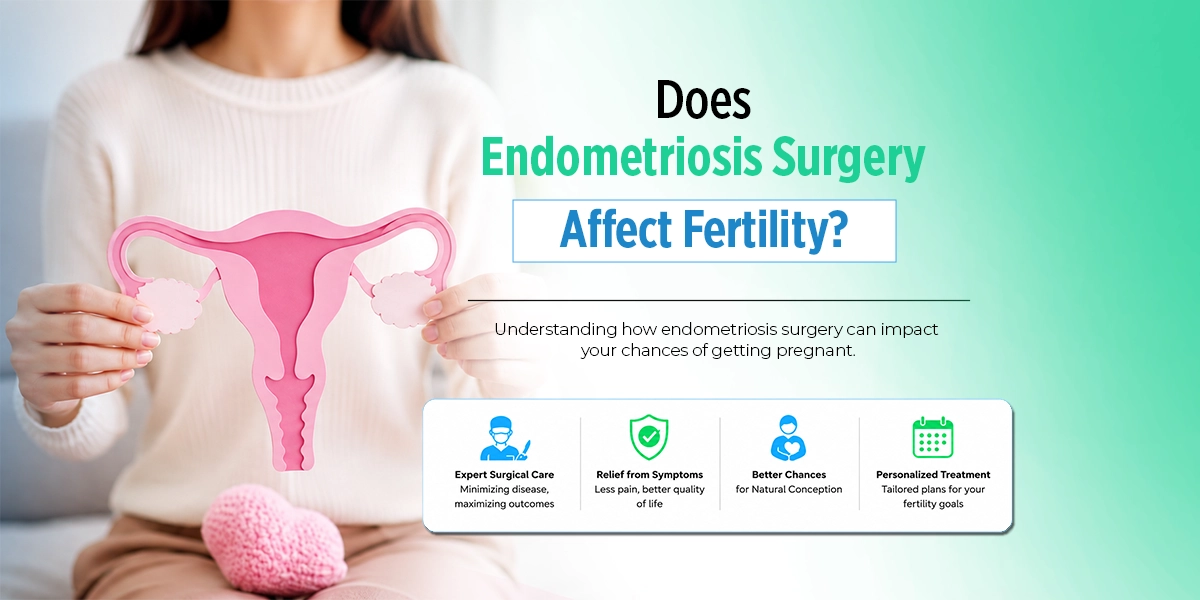
Does Endometriosis Surgery Affect Fertility? What You Need to Know

Does Endometriosis Surgery Affect Fertility

Quick Answer 

Endometriosis surgery — most commonly laparoscopy — can improve fertility by removing lesions, clearing adhesions, and restoring normal pelvic anatomy. For many women, especially those with stage 1–3 disease, surgery increases the chances of natural conception. However, repeated ovarian surgeries carry a risk of reducing egg reserve, so timing and surgical approach matter. The outcome depends on individual factors including disease stage, age, and ovarian health.

If you’ve been diagnosed with endometriosis and are thinking about starting a family, one of the first questions that comes to mind is: Does endometriosis surgery affect fertility? It’s a question worth exploring carefully, because the answer isn’t simply yes or no — it depends on the type of surgery, the stage of endometriosis, and your individual circumstances. This article breaks it all down with evidence-based information so you can have an informed conversation with your specialist.

What Is Endometriosis and Why Does It Affect Fertility?

Endometriosis is a chronic condition where tissue similar to the uterine lining grows outside the uterus — on the ovaries, fallopian tubes, or elsewhere in the pelvis. This displaced tissue responds to hormonal cycles just like the uterine lining, causing inflammation, scarring, and adhesions over time.

Endometriosis and fertility issues are closely linked because of the way the condition physically disrupts the reproductive environment. Adhesions can block the fallopian tubes, impair egg quality, alter the uterine environment, and interfere with embryo implantation. Studies suggest that roughly 30–50% of women with endometriosis experience some degree of difficulty conceiving.

Does Endometriosis Affect Fertility Even at Mild Stages?

Many women assume that only severe endometriosis causes reproductive challenges — but that’s not entirely accurate. Even minimal or mild disease can create an inflammatory pelvic environment that reduces the chances of natural conception. The impact on fertility isn’t always proportional to the visible extent of the disease; some women with extensive lesions conceive naturally, while others with minimal disease struggle.

This is one reason why a personalised assessment from a specialist matters far more than a stage number alone.

How Surgery Fits Into the Picture

Surgery — most commonly laparoscopy — is used to remove or destroy endometriosis lesions, drain or excise endometriomas, and break up adhesions. The goal is to restore as much normal pelvic anatomy as possible, which in turn creates a better environment for conception.

So does endometriosis surgery affect fertility? In many cases, surgery has a positive effect. A landmark systematic review published in Human Reproduction Update found that laparoscopic excision of minimal to moderate endometriosis significantly improved spontaneous pregnancy rates compared to diagnostic laparoscopy alone.

However, surgery is not a guaranteed fix — and in some cases, it carries its own risks to ovarian reserve.

The Risks: When Surgery May Reduce Fertility

This is the nuanced part that many patients aren’t told upfront. While surgery can improve fertility for many women, repeated surgeries on the ovaries — particularly for endometriomas — carry a risk of reducing ovarian reserve (the number of remaining eggs).

Each time an ovarian cyst is surgically removed, there is a risk that healthy ovarian tissue is inadvertently taken along with it. Women who have had multiple ovarian surgeries may notice a measurable decline in their Anti-Müllerian Hormone (AMH) levels, which is a key marker of egg reserve.

This is why most fertility specialists recommend:

  • Minimising the number of ovarian surgeries where possible
  • Considering egg freezing before surgery if ovarian reserve is already a concern
  • Seeking a surgeon experienced in endometriosis excision rather than ablation, as excision tends to be more precise and less damaging to surrounding tissue

How to Get Pregnant with Endometriosis Naturally

Natural conception is absolutely possible for many women with endometriosis, particularly those with stage 1 or 2 disease. Timing intercourse around ovulation, maintaining a healthy weight, and reducing alcohol and caffeine intake are all practical steps that improve your odds.

An anti-inflammatory diet — rich in omega-3 fatty acids, leafy greens, and antioxidants — may also help reduce the systemic inflammation that endometriosis creates. Some evidence supports supplements like CoQ10 and Vitamin D for egg quality, though these should always be taken under medical guidance.

That said, if you’ve been trying to conceive for 6–12 months without success (or 6 months if you’re over 35), it’s time to seek specialist input. Early assessment allows for timely intervention rather than months of unnecessary waiting. At Best Life Fertility Centre, our specialists work with you to understand the full picture — your stage, your cycle, and your goals — before recommending any next steps.

Endometriosis and Fertility Issues: When to Consider IVF

IVF is not always necessary, but it becomes a more active consideration when:

  • Natural conception hasn’t occurred despite surgery and 6–12 months of trying
  • Both fallopian tubes are blocked or significantly damaged
  • Ovarian reserve is significantly reduced
  • You are over 35 with moderate to severe endometriosis

IVF bypasses many of the mechanical barriers that endometriosis creates, making it a highly effective pathway for many women with this condition. IUI (intrauterine insemination) may also be explored as an intermediate step depending on your situation. If you’re unsure which route is right for you, the fertility team at Best Life Fertility Centre can help you evaluate your options based on your current ovarian reserve, surgical history, and age.

Is It Dangerous to Get Pregnant with Endometriosis?

For most women, pregnancy with endometriosis is safe. Pregnancy itself — due to the hormonal environment it creates — can temporarily suppress endometriosis symptoms and may even slow disease progression during that period.

However, women with endometriosis do have a slightly elevated risk of certain complications, including preterm labour, placenta praevia, and caesarean delivery. This doesn’t mean pregnancy should be avoided — it means ongoing monitoring by an experienced obstetric team is important. With proper antenatal care, the vast majority of women with endometriosis have healthy, uncomplicated pregnancies.

What’s the Best Age to Get Pregnant with Endometriosis?

There is no universal best age, but earlier is generally better. Ovarian reserve naturally declines with age, and endometriosis can accelerate this decline. If you are diagnosed in your 20s or early 30s and are open to having children, most specialists recommend not delaying family planning unnecessarily.

Women in their late 30s and beyond can absolutely conceive with endometriosis — often with the help of fertility treatments — but starting the conversation with a specialist early provides the most options. If you’re not ready to conceive now, egg freezing may be worth discussing with your gynaecologist to preserve future options.

Final Thoughts

So, does endometriosis surgery affect fertility? The honest answer is: it depends — and often, it helps. For many women, laparoscopic surgery significantly improves the chances of natural conception by restoring normal anatomy and reducing the inflammatory burden of the disease. For others, particularly those with recurrent endometriomas or a history of multiple surgeries, the potential impact on ovarian reserve requires careful discussion with a specialist.

The most important takeaway is that endometriosis does not mean infertility. With the right diagnosis, the right surgical team, and a personalised plan, many women with endometriosis go on to have healthy pregnancies — naturally or with support.

If you have questions specific to your situation, a consultation with a gynaecologist or reproductive specialist experienced in endometriosis is always the best next step. You can book a consultation with Best Life Fertility Centre to get a personalised assessment and a clear path forward.


Frequently Asked Questions

1. Can stage 1 endometriosis cause infertility?

Yes. Even minimal endometriosis creates pelvic inflammation that can slow conception by impairing egg quality and implantation, though natural pregnancy remains possible.

Yes, significantly. Extensive adhesions and endometriomas distort pelvic anatomy, making natural conception difficult and often requiring surgical or assisted reproductive treatment.

Wait 4–8 weeks to heal, then try actively. The first 6–12 months post-surgery typically offer the best natural fertility window.

Track ovulation accurately, follow an anti-inflammatory diet, take specialist-recommended supplements, reduce alcohol and caffeine, and seek early fertility advice.

All stages can affect fertility, but stages 3 and 4 carry the greatest risk due to blocked tubes, endometriomas, adhesions, and reduced ovarian reserve.

Most popular

bestivf

Book Appoinment

IVF Specialist

Begin Your Parenthood Journey Today

Your dream of parenthood deserves the right support. At Best Life Fertility, our
experts are here to walk with you every step of the way—combining advanced fertility
treatments with compassionate care.

Book Your Consultation

bestivf

Dr. Carolina Arboleya

Obstetrician, Gynecologist and IVF Specialist

Dr. Carolina Arboleya is an obstetrician and gynecologist, specializing in assisted reproduction (IVF). She earned her specialty at the prestigious Hospital Universitario La Paz in Madrid, Spain, and completed a master’s in Assisted Reproduction and Fertility at the Technological University TECH. She is also committed to continuous professional development, regularly participating in conferences advanced training to stay at the forefront of fertility medicine.

With over five years of experience working with patients facing infertility, she is skilled in both diagnostic and surgical fertility procedures. She has a particular interest in treating unexplained infertility and endometriosis, providing care with precision and compassion.

  • Dr. Arboleya is fluent in Spanish, English, and French, and has basic knowledge of Portuguese and Italian.

bestivf

Shalin Varughese

OPD Registered Nurse

Reproductive Medicine and Infertility Consultant

  • Over 10 years of nursing experience

  • Bachelor of Science in Nursing from GSL College of Nursing

  • Employee of the Month Award at Saudi German Hospital

  • Languages: English/Indian/Malayalam

bestivf

Jasmi krishnan Jagadamma

OPD Registered Nurse

Reproductive Medicine and Infertility Consultant

  • Over 8 years of experience as a Staff Nurse
  • Bachelor of Nursing
  • Awarded for selfless service and excellence in Basic Life Support
  • Languages: English, Hindi, Gujarati, Malayalam
bestivf

Veena Babu

OT Registered Nurse

Reproductive Medicine and Infertility Consultant

  • Over 8 years of experience as a Staff Nurse
  • Bachelor of Nursing
  • Languages: English, Malayalam
bestivf

Alana N Babu

OPD Registered Nurse

Reproductive Medicine and Infertility Consultant

  • Over 4 years of clinical nursing experience across OT, palliative care, and general hospital settings
  • Bachelor of Science in Nursing
  • Specialized experience as an OT Nurse
  • Languages: English , Malayalam
bestivf

Moby BabyChen

Head Nurse

Reproductive Medicine and Infertility Consultant

  • Over 8 years of experience as a Registered Nurse with specialization in ICU, Pediatric ICU, Isolation ICU, and currently in IVF care
  • B.Sc. Nursing graduate
  • Languages: English, Malayalam
bestivf

Jinshy Sween

Lab tech

Reproductive Medicine and Infertility Consultant

  • Over 7 years of advanced experience in andrology and embryology at JCI and CAP-accredited IVF centers in the Middle East
  • Bachelor of Science in Medical Laboratory Technology from Mahatma Gandhi University, India 
  • Languages: English, Hindi, Tamil, Malayalam
bestivf

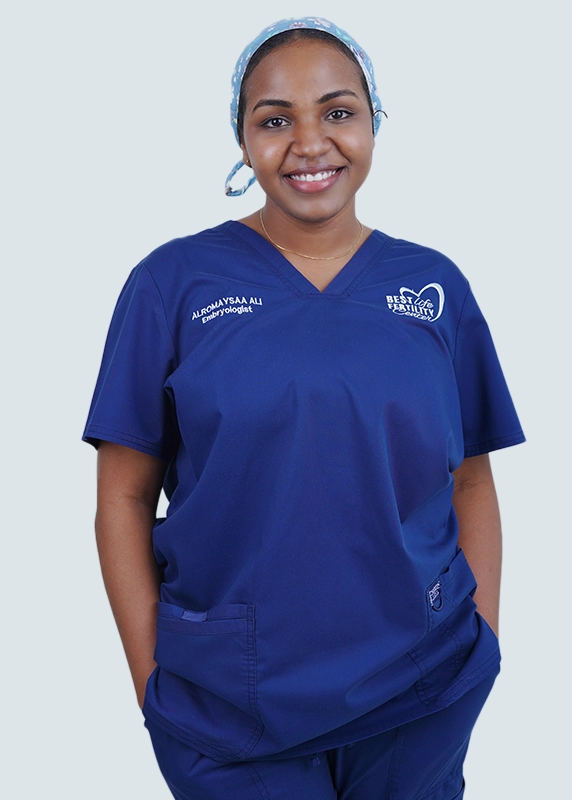
Alromysaa ali

Embryologist

Reproductive Medicine and Infertility Consultant

  • Clinical embryologist with hands-on experience in ovum pick-up, denudation, ICSI, cryopreservation, embryo transfer, and lab quality control

  • Trained in core assisted reproductive techniques and embryology lab operations

  • Skilled in embryology lab procedures ensuring quality assurance and optimal outcomes

  • Areas of expertise include Embryology, ICSI, Cryopreservation, Embryo Transfer, and IVF Lab Management

  • Languages: English, Arabic

bestivf

Raneem Alghadban

Anesthesia Technician

Reproductive Medicine and Infertility Consultant

  • Certified anesthesia technician with a diploma in medical sciences from Damascus University

  • Over 6 years of experience assisting anesthesiologists in the operating room with pre-anesthesia procedures and providing general/regional anesthesia

  • Responsible for anesthesia records, patient positioning during spinal and epidural anesthesia, and ensuring patient safety before, during, and after anesthesia

  • Experienced in intravascular catheterization and supporting CPR in the ICU with a component support team 

  • Familiar with a variety of equipment, including the Boyle anesthesia machine, injection pumps, and fiber optic bronchoscopes

  • Excellent communication skills, compassionate, and dedicated to continuous learning and growth

  • Languages: Arabic, English

bestivf

Dr. Ali Harb

Anesthesiologist

Reproductive Medicine and Infertility Consultant

  • Over 20 years of experience in anesthesiology

  •  Specialization in general anesthesia, regional anesthesia, spine, epidural, fertility, and intensive care patient management

  • Expertise in patient care and safety, making him a leader in the field of anesthesiology

  •  Languages: English, Russian, Arabic

bestivf

Dr. Fadi Bakjaji

Consultant Obstetrician, Obstetrician and Reproductive Specialist

Reproductive Medicine and Infertility Consultant

  • Expert in Infertility & Reproductive Medicine since 2006
  • Senior Consultant in Reproductive Medicine and Surgery, Senior Consultant in Obstetrics and Gynecology
  • German Board Certified Reproductive Endocrinology & Infertility, German Board Certified Obstetrics & Gynecology, German Certificate in Minimally Invasive Surgery/Gynecology Endoscopy (AGE) from DGGG
  • Head of the Department of Gynecology and Reproductive Medicine – Gynecology Clinic – IVF Unit – University Hospital Bonn – Germany, Faculty Member, and Lecturer.
  • Languages: English, Arabic, German
bestivf

Dr. Reem Badawi

OBS/GYN

Reproductive Medicine and Infertility Consultant

  • Over 14 years of experience in obstetrics and gynecology
  • Master’s degree in Obstetrics and Gynecology from Aleppo University
  • Syrian Board Certified in Obstetrics and Gynecology
  • Licensed Specialist with DHA and MOH (UAE)
  • Skilled in prenatal care, labor and delivery, postpartum care, and gynecologic surgeries
  • Languages: Arabic, English, German
bestivf

Dr. Mokhamad Daiekh

Co-Founder/CEO

Reproductive Medicine and Infertility Consultant

  • Bachelor of Pharmacy and PhD in Toxicology and Medical Laboratories (2002)
  • More than 20 years of executive experience in the business and medical fields
  • Strong belief in the power of teamwork for business development
  • He is fluent in Russian and Arabic, and has extensive knowledge and experience in the field of pharmacology and toxicology.
bestivf

Dr. Mojgan Shafiei Shahidloo

IVF Lab Director

Reproductive Medicine and Infertility Consultant

  • Licensed embryologist with 25 years of experience.
  • Expert in embryo biopsy, blastocyst and protoderm, assisted hatching, blastocyst culture, and andrology laboratory work.
  • Experienced in quality control management in embryology and andrology laboratories.
  • Expertise in online laboratory monitoring and staff education/training.
  • Member of Cevas and ISRM.
  •  Scientific member of the evaluation committee of the Royan International Research Awards and the International Conference on Fertility and Reproduction.
  • Capable of multitasking and managing a busy laboratory while teaching and training doctoral students.
  • Languages : English/Farsi/Turkish
bestivf

Dr. Moujahed Hammami

Consultant Obstetrician and Gynecologist

Reproductive Medicine and Infertility Consultant

  • Over 30 years of experience in obstetrics and gynecology
  • Master’s degree from Aleppo University. Training and specialization in Germany
  • German Board (FACHARZT) in Obstetrics and Gynecology,
  • Doctor of Gynecologic Laparoscopy
  • He has worked in Germany, Syria, Kuwait and the UAE
  • Gynecology Surgery, Laparoscopic Surgery, Infertility Treatment, Pregnancy Care, Breast Health Laparoscopic
  • Surgery, Infertility Treatment, Menopause Treatment, Sexual Health, Aesthetic Gynecology
  • Languages: English, Arabic, German
bestivf

Dr. Afraa Dayeh

Clinic Manager

Reproductive Medicine and Infertility Consultant

  • Pharmacy Degree; Licensed Pharmacist and Embryologist with the Syrian Board of Medical Specialties
  • Master’s Degree in Biotechnology in Human Assisted Reproduction and Embryology from the University of Valencia, Spain

  • Over 9 years of experience in assisted fertilization technology, specializing in embryology and performing advanced IVF procedures abroad

  • Expertise in quality control in embryology and andrology laboratories

  • Experienced in management and communication with fertility patients

  • Languages: Russian, Arabic, English

bestivf

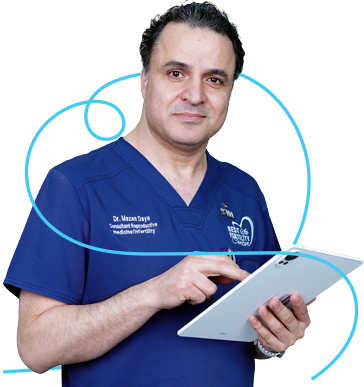
Dr. Mazen Dayeh

General Manager

Reproductive Medicine and Infertility Consultant

Dr. Mazen is a renowned fertility specialist and expert in Reproductive Endocrinology and Infertility, with over two decades of experience in the field. His deep knowledge and compassionate approach have made him one of the most trusted names in fertility care.

He is widely recognized as one of the top IVF doctors in Dubai, offering advanced reproductive treatments tailored to each patient’s unique needs. Dr. Mazen combines cutting-edge technology with personalized care to maximize success rates and ensure the best outcomes.

Committed to helping couples fulfill their dreams of parenthood, Dr. Mazen has built a strong reputation for excellence, empathy, and dedication. His clinic is a destination for patients seeking expert guidance and world-class fertility solutions.

Education:

  • Saint Petersburg I.P. Pavlov State Medical University, Russia (Primary Medical Qualification – PMQ)

  • Russian Academy for Medical Sciences, (Specialty Training and PhD)