⚡ Quick Overview
- What is FET: A procedure where a previously frozen embryo is thawed and transferred into the uterus — no egg retrieval needed again.
- How long it takes: The endometrial preparation phase takes 2–4 weeks, followed by the transfer day itself.
- Success rates in Dubai: 40–60% for women under 35; up to 70%+ with PGT-A tested embryos.
- Frozen vs Fresh: Frozen blastocyst transfers now show equal or superior live birth rates vs fresh transfers in most patient groups.
- When you find out: A blood hCG pregnancy test is done 10–14 days after transfer.
- UAE regulation: Embryos can be cryopreserved and stored for up to 5 years (extendable) under UAE Ministry of Health guidelines.
If you’ve already been through an IVF cycle and have frozen embryos waiting — or if your specialist has just recommended a frozen cycle as your next step — you’re likely feeling a mix of hope and uncertainty. That’s completely normal. And the fact that you’re here, asking questions, is exactly the right place to start.
Frozen embryo transfer in Dubai has become one of the most commonly performed fertility procedures in the UAE, and for good reason. Advances in embryo cryopreservation — specifically a flash-freezing technique called vitrification — have made frozen transfers not just safe, but in many cases more successful than fresh ones. This guide will walk you through everything: how it works, how to prepare, what success really looks like, and what to expect at every stage.
What Is a Frozen Embryo Transfer — and How Is It Different from a Fresh Transfer?
In a standard IVF cycle, embryos are created in the lab and transferred into the uterus a few days later — that’s a fresh transfer. A frozen embryo transfer (FET) is different: the embryos created during a previous IVF cycle were frozen at their peak quality — either at the cleavage stage (Day 3) or blastocyst stage (Day 5/6) — and stored. When you’re ready for a transfer, those embryos are carefully thawed and placed into your uterus during a separate, less medically intensive cycle.
Why would you choose a frozen transfer? Several reasons. Your body isn’t recovering from ovarian stimulation, so the uterine environment is often more receptive. Embryos can be genetically screened before freezing to select only the healthiest ones. And if a fresh transfer didn’t result in pregnancy, your frozen embryos give you another chance without starting from scratch. For many couples, having frozen embryos in storage is one of the most reassuring parts of their fertility journey. Our IVF and ICSI treatment programme is designed with this full picture in mind — creating and preserving embryos strategically from the very first cycle.
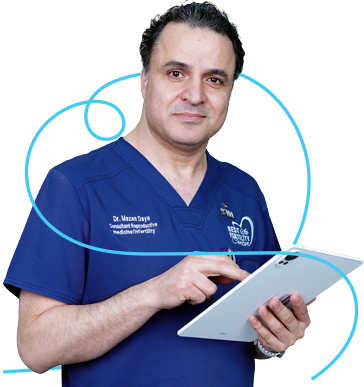
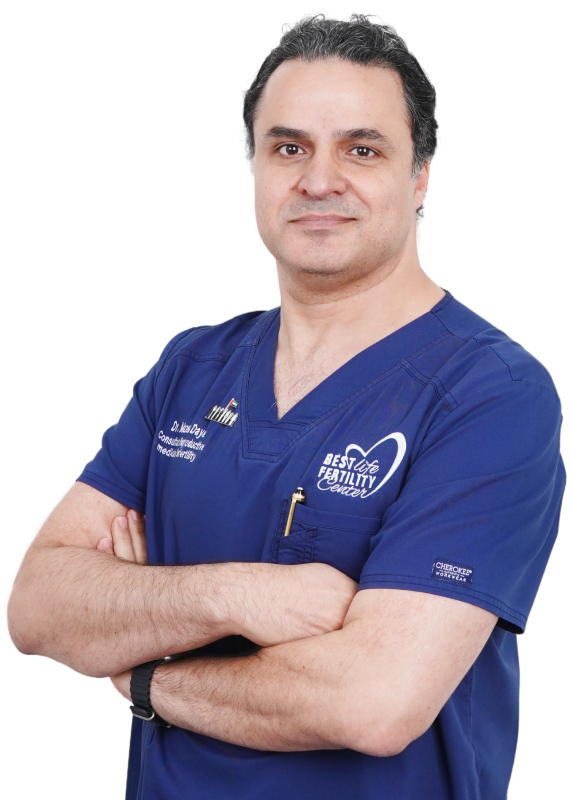
“In my clinical experience, frozen embryo transfer has completely transformed how we approach IVF outcomes. The ability to freeze, screen, and transfer at the optimal moment means we are no longer racing against a single stimulated cycle — we are building a considered strategy for each couple.” — Dr. Mazen Dayeh, Consultant Reproductive Endocrinologist, Best Life Fertility Center, UAE |
The FET process is more straightforward than a full IVF cycle — there’s no egg retrieval, no sedation, and far fewer injections. Here’s what to expect from start to finish:
- Initial Consultation & Baseline Assessment — Your specialist reviews your frozen embryos, your medical history, and decides on the best protocol for endometrial preparation. Blood tests and a baseline ultrasound are performed.
- Endometrial Preparation — The uterine lining needs to be at least 7mm thick and show a healthy “triple-line” pattern on ultrasound before transfer can proceed. This is achieved either through a natural cycle (monitoring your own ovulation) or a hormonal replacement cycle using oestrogen, then progesterone.
- Monitoring — Regular ultrasound scans and blood hormone checks over 2–4 weeks confirm the lining is developing correctly. Timing is everything — transfer is carefully scheduled around the progesterone start date.
- Embryo Thawing — On transfer day, your frozen embryo is warmed in the lab using the vitrification protocol. Modern survival rates for vitrified embryos exceed 95%. Only embryos that survive thawing and show continued development are transferred.
- The Transfer — A thin, flexible catheter guides the embryo through the cervix and into the uterus under ultrasound guidance. The procedure is gentle, takes just a few minutes, and requires no anaesthesia.
- Luteal Phase Support — Progesterone supplementation continues after transfer to support implantation. This may be given vaginally, orally, or by injection depending on your protocol.
- Pregnancy Test — A blood hCG test is performed 10–14 days after transfer. This is the moment of confirmation — and whatever the result, your team will be there to guide the next step.
👉 About endometrial thickness: Research consistently shows that an endometrial lining below 7mm significantly reduces live birth rates in FET cycles. At Best Life Fertility Center, UAE, we do not proceed with transfer if the lining has not reached the optimal threshold — because your best chance always comes first.
Frozen Embryo Transfer Explained: Natural Cycle vs Hormonal Protocol
One of the first decisions your doctor will discuss with you is how to prepare your uterus. There are two main approaches, and the right one depends on your cycle regularity, ovarian function, and overall health profile.
Natural Cycle FET
In a natural cycle, your own body leads the way. Your specialist monitors your natural ovulation using serial ultrasounds and hormone blood tests. Once a dominant follicle reaches around 18–20mm and your lining exceeds 7mm, a trigger injection may be given to confirm ovulation timing, after which progesterone is added to prepare the endometrium. Transfer follows a set number of days after confirmed ovulation.
This approach is increasingly favoured because emerging evidence suggests natural cycles carry fewer obstetric risks than hormone replacement cycles — a concept sometimes referred to as “back to nature” FET. It’s the preferred pathway for women with regular, predictable menstrual cycles.
Hormonal Replacement Cycle (HRT) FET
In an HRT cycle, external oestrogen is used to build the uterine lining artificially, bypassing ovulation entirely. This makes scheduling far more predictable — your clinic, embryology lab, and transfer date can all be precisely coordinated. Progesterone is then added to mature the lining before transfer.
HRT cycles are particularly useful for women with irregular cycles, poor ovarian reserve, or those who have undergone menopause. They are also the protocol of choice when preimplantation genetic testing (PGT-A) has been performed and a specific embryo is ready for a scheduled transfer.
“My preference is always to work with a patient’s natural physiology wherever possible — a natural cycle FET, when applicable, keeps the hormonal environment as close to nature as we can achieve. But for patients where that isn’t feasible, a well-managed hormonal protocol is equally effective. The protocol must fit the patient, not the other way around.” — Dr. Mazen Dayeh, Consultant Reproductive Endocrinologist, Best Life Fertility Center, UAE |
How to Prepare for a Frozen Embryo Transfer Procedure
Preparation for your FET is about more than just medication. The weeks leading up to transfer are an opportunity to genuinely optimise your body — and many patients find that taking an active role in this phase gives them a real sense of control during what can otherwise feel like a waiting game.
Medical Preparation
- Follow your prescribed oestrogen and progesterone protocol precisely — missed doses affect lining development and can result in cycle cancellation.
- Attend all monitoring ultrasounds. These are not optional check-ins; they are the diagnostic foundation that confirms your body is ready.
- Discuss any supplements, vitamins, or medications you’re taking with your doctor — including over-the-counter products — as some can interfere with your cycle.
Lifestyle & Nutrition
- Focus on anti-inflammatory foods: leafy greens, oily fish, nuts, and berries are all associated with better endometrial health.
- Stay well-hydrated — adequate fluid intake supports circulation to the uterine lining.
- Avoid alcohol, smoking, and high-impact exercise in the week before and after transfer. Light walking is encouraged; strenuous activity is not.
- If your BMI is elevated, even modest weight reduction before a FET cycle can meaningfully improve outcomes — speak to our team about our holistic support programme.
Emotional & Mental Wellbeing
- The two-week wait after transfer is widely acknowledged as one of the most emotionally challenging parts of IVF. Plan gentle activities and support structures in advance.
- Talk openly with your partner about how you each experience the wait — people process this differently, and alignment early reduces conflict later.
- Consider acupuncture, mindfulness, or yoga — while not clinically proven to increase success rates, they have strong evidence for reducing anxiety and improving wellbeing during treatment.
✅ At Best Life Fertility, UAE, preparation doesn’t start the day you begin medication. When you come in for your pre-FET consultation, Dr. Mazen’s team will build a complete personalised protocol — including lifestyle guidance, supplement review, and a detailed treatment calendar — so nothing is left to chance.
Frozen Embryo Transfer Success Rates in Dubai — What the Numbers Actually Mean
Success rates are the question every patient asks — and understandably so. But they require context to be meaningful. A headline percentage tells you very little about your situation. Here’s what the current evidence shows, and how it applies to patients seeking frozen embryo transfer in Dubai.
| Age Group | FET Pregnancy Rate (per transfer) | Live Birth Rate (approx.) |
|---|---|---|
| Under 35 | 50–60% | 40–52% |
| 35–37 | 40–50% | 35–45% |
| 38–40 | 30–40% | 25–35% |
| Over 40 | 20–30% | 15–25% |
| Any age — PGT-A tested embryo | 70–72% | 60–64% |
The most significant finding from recent research — published in journals including Human Reproduction and Frontiers in Endocrinology — is that when using PGT-A genetically tested embryos, a woman’s age at transfer becomes far less predictive of success. The quality of the embryo matters more than the age of the woman at the point of transfer. This is a genuinely transformative shift in how we think about fertility timelines.
It’s also worth understanding what a “successful” transfer means. A positive blood test is a biochemical pregnancy. A confirmed heartbeat at 6 weeks is a clinical pregnancy. A live birth is the outcome that truly matters — and that’s the number you should always ask your clinic for. If you’d like to understand how these metrics apply to your specific situation, our team is happy to walk through your results in full during a consultation.
Are Frozen Embryos More Successful Than Fresh? The Evidence Is Clear
This is one of the most common questions patients ask — and the answer has shifted significantly over the last decade. For most patient profiles, frozen blastocyst transfers now achieve equal or superior live birth rates compared to fresh embryo transfers.
A major 2024 national cohort study found that frozen blastocyst transfers were associated with higher clinical pregnancy and live birth rates than fresh blastocyst transfers — particularly in non-PCOS patients under 38. The physiological explanation makes sense: in a frozen cycle, the uterus is not exposed to the artificially elevated hormone levels caused by ovarian stimulation. The endometrium is given time to recover and reach its natural receptive state, which appears to support implantation more effectively.
There are also practical advantages. Frozen cycles allow time for genetic screening — meaning the embryo selected for transfer has already been confirmed chromosomally normal. They eliminate the risk of ovarian hyperstimulation syndrome (OHSS) at transfer. And they give couples the flexibility to transfer when timing, health, and emotional readiness align. Our female fertility treatment team will always guide you on whether frozen or fresh transfer is the right clinical decision for your specific cycle — it is never a one-size-fits-all answer.
“The question ‘are frozen embryos as good as fresh?’ is one I’m asked in almost every consultation. My honest answer is: for the right patient, frozen transfers are not just as good — they can be better. The key is having high-quality vitrification in your laboratory, and a team that knows when to use each approach.” — Dr. Mazen Dayeh, Consultant Reproductive Endocrinologist, Best Life Fertility Center, UAE |
Why Choose Frozen Embryo Transfer in Dubai?
Dubai has emerged as one of the leading destinations for fertility treatment in the Middle East and globally. Several factors make it particularly well-suited for FET cycles:
- Regulatory framework: All fertility clinics in Dubai operate under the Dubai Health Authority (DHA) and the UAE Ministry of Health and Prevention (MOHAP). Embryo cryopreservation is legally permitted for up to 5 years, extendable — giving couples genuine long-term options.
- Advanced laboratory standards: Dubai’s top fertility labs operate to JCI and CAP-accreditation standards, with vitrification technology that achieves embryo survival rates exceeding 95%.
- Specialist expertise: Many reproductive endocrinologists practising in Dubai have trained at institutions in the US, UK, and Europe, bringing international expertise to a local setting.
- Accessibility for international patients: Many UAE clinics offer pre-cycle consultations via telemedicine, allowing international patients to begin their assessment before travelling. Monitoring during preparation can often be coordinated with a clinic in your home country.
According to the UK’s Human Fertilisation and Embryology Authority (HFEA), frozen embryo transfer cycles now represent a significant and growing proportion of all IVF procedures globally — reflecting increasing confidence in the outcomes achievable through this approach. Dubai’s clinics are aligned with these global trends, investing in the technology and protocols that produce results.
Final Thoughts — Is Frozen Embryo Transfer the Right Next Step for You?
Whether you have embryos already waiting or you’re planning your first IVF cycle with a freeze-all strategy in mind, frozen embryo transfer in Dubai offers a genuinely powerful pathway to parenthood. It is less physically demanding than a fresh cycle, more flexible in timing, increasingly effective thanks to advances in vitrification and genetic screening — and for many couples, it represents a second or third chance that actually delivers.
The most important thing you can do right now is get the right information for your specific situation. Success rates matter, but they’re only meaningful when your specialist has reviewed your embryo quality, your uterine health, your age, and your full medical history. At Best IVF UAE, we take the time to do exactly that — because you deserve a plan that’s built around you, not a protocol that’s built for everyone.
If you have frozen embryos ready, or you want to understand whether a freeze-all strategy is right for your upcoming IVF cycle, book a consultation with Dr. Mazen Dayeh and our team. We’ll review everything together — clearly, honestly, and without rushing. Also explore our patient education resources for further reading at your own pace.
Frequently Asked Questions
How successful is the frozen embryo transfer?
FET success rates range from 40–60% for women under 35. With PGT-A tested embryos, pregnancy rates can exceed 70%, regardless of the patient’s age at transfer.
How long after frozen embryo transfer will I know if it worked?
A blood hCG pregnancy test is taken 10–14 days after your transfer date. This measures pregnancy hormone levels and confirms whether implantation has occurred.
How pregnant are you after a frozen embryo transfer?
Pregnancy is dated from your last menstrual period — meaning by transfer day, you’re typically considered 3–5 weeks pregnant on the conventional pregnancy calendar.
Are frozen embryos good for IVF?
Absolutely. Vitrification preserves embryos with over 95% survival rates. Frozen embryos are clinically equivalent — and in many studies, superior — to fresh transfers.
Are frozen embryos more successful than fresh?
In most patient groups, yes. 2024 research confirms frozen blastocyst transfers achieve higher live birth rates than fresh transfers, especially in non-PCOS patients under 38.