|
Deciding to explore fertility treatment in Dubai is rarely a spontaneous decision. For most couples, it follows months — sometimes years — of trying naturally, navigating confusing information, and wondering whether the problem lies with one partner or both. If that sounds familiar, this guide is written for you.
What follows is a clear, honest explanation of how IVF works, who it is designed for, and what you can realistically expect from the process. There are no promises of guaranteed outcomes here — only accurate, expert-informed information to help you move forward with confidence.
What Is IVF, Exactly?
IVF stands for In Vitro Fertilization. “In vitro” is Latin for “in glass” — meaning the fertilization process happens outside the body, in a laboratory. The egg and sperm are brought together under carefully controlled conditions, monitored as they develop into an embryo, and then transferred back into the uterus.
The goal is the same as natural conception: a healthy embryo implanting in the uterine lining and developing into a pregnancy. IVF simply provides a controlled, medically assisted environment for each step of that process when the body cannot complete it on its own.
It is worth noting that IVF is not the only form of fertility treatment available — and for many couples, it is not the first step. A thorough diagnostic assessment will determine whether IVF/ICSI treatment, a simpler treatment, or a combination approach is most appropriate for your situation.
Who Is IVF Designed For?
IVF is recommended in a range of clinical scenarios. At Best Life Fertility Centre, our specialists assess each couple individually before recommending any treatment, but the most common indications include:
- Blocked or damaged fallopian tubes — preventing natural fertilization
- Ovulation disorders — including irregular cycles or anovulation
- Low ovarian reserve — where fewer eggs are available for fertilization
- Endometriosis — particularly where it has affected the tubes or ovaries
- Male factor infertility — including low sperm count, poor motility, or abnormal morphology
- Unexplained infertility — where no single cause has been found after full investigation
- Recurrent miscarriage — especially where embryo genetic testing (PGT) may improve outcomes
- Same-sex couples and single parents — requiring donor eggs, donor sperm, or surrogacy
If you have been trying to conceive for 12 months without success (or 6 months if you are over 35), it is worth speaking to a fertility specialist regardless of whether you suspect a specific cause.
How the IVF Process Works: Stage by Stage
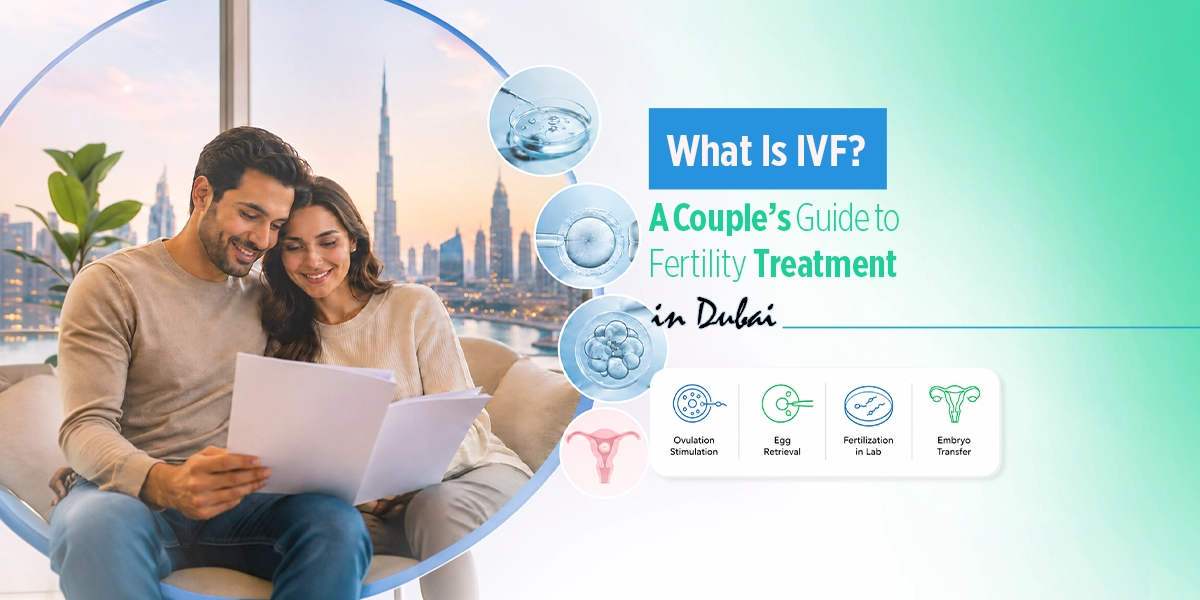
Understanding the sequence of events helps remove much of the anxiety around IVF. Here is how a standard IVF process unfolds:
Stage 1 — Initial Assessment and Diagnosis
Before any treatment begins, both partners undergo a fertility workup. For women, this typically includes hormonal blood tests (AMH, FSH, LH), a transvaginal ultrasound to assess ovarian reserve, and imaging to check the uterus and fallopian tubes. For men, a detailed semen analysis is the starting point. This stage usually takes one to two clinic visits and provides the foundation for a personalized treatment plan.
Stage 2 — Ovarian Stimulation (Days 1–12, approximately)
Daily hormone injections encourage the ovaries to produce multiple mature eggs rather than the single egg released in a natural cycle. Your doctor will monitor your response with regular ultrasound scans and blood tests, adjusting medication doses as needed. This is the most intensive phase of the cycle in terms of clinic visits, typically requiring three to five scans.
Stage 3 — Trigger Injection and Egg Retrieval
When the follicles reach the right size, a trigger injection is given to complete egg maturation. Egg retrieval is scheduled approximately 36 hours later. The procedure is performed under light sedation and takes around 15–20 minutes. Most patients experience minimal discomfort and are able to return home the same day.
Stage 4 — Fertilization in the Embryology Laboratory
Retrieved eggs are prepared and combined with a sperm sample in the lab. Where male factor infertility is a concern, ICSI (Intracytoplasmic Sperm Injection) is used instead — a technique in which a single healthy sperm is injected directly into each egg. This significantly improves fertilization rates in cases of poor sperm quality.
Research published in Fertility and Sterility, one of the field’s leading peer-reviewed journals, has consistently demonstrated that laboratory environment quality — including incubator conditions, culture media, and embryologist expertise — is among the strongest predictors of IVF success.
Stage 5 — Embryo Development and Grading
Fertilized eggs are observed over the next three to five days as they develop. Embryologists grade each embryo based on its development and appearance. Blastocyst-stage embryos (day 5) typically have the highest implantation potential. Where appropriate, Preimplantation Genetic Testing (PGT-A) may be offered to screen embryos for chromosomal abnormalities before transfer.
Stage 6 — Embryo Transfer
One carefully selected embryo is transferred into the uterus via a thin, flexible catheter. The procedure takes only a few minutes, requires no sedation, and is often described as similar to a routine gynaecological examination. Any remaining good-quality embryos can be frozen for future use.
Stage 7 — The Two-Week Wait and Pregnancy Test
After the transfer, the embryo needs time to implant. A blood test measuring hCG levels is performed approximately 10–14 days later to confirm whether pregnancy has occurred. This waiting period is emotionally the most challenging part of the cycle for many couples — which is why psychological support and clear communication from your care team matter enormously during this time.
What Affects IVF Success Rates?
No clinic can guarantee a pregnancy from any single IVF cycle. Success rates are influenced by a combination of factors:
- Female age — the most significant variable. Success rates are highest in women under 35 and decline progressively with age, particularly after 40.
- Ovarian reserve — a higher number of eggs retrieved generally improves the chances of obtaining viable embryos.
- Embryo quality — determined in the laboratory and influenced by both egg and sperm quality.
- Uterine health — conditions such as fibroids, polyps, or a thin endometrium can affect implantation.
- Lifestyle factors — smoking, excessive alcohol consumption, and significant obesity can reduce success rates.
- Clinic and laboratory standards — the quality of the embryology team and laboratory environment directly impact outcomes.
Understanding these factors helps you ask better questions and set realistic expectations before starting treatment.
IVF Alongside Other Fertility Treatments
IVF is one part of a broader spectrum of fertility care. Depending on your assessment results, your doctor may recommend one of the following either before or alongside IVF:
- IUI (Intrauterine Insemination) — a less invasive procedure often used as a first-line treatment in certain cases
- Ovulation Induction — medication to regulate egg release, sometimes sufficient without further intervention
- Surgical Treatment — for conditions like endometriosis, polyps, or blocked tubes where surgery first improves IVF outcomes
- Fertility Preservation — egg or sperm freezing for patients who wish to delay treatment or are facing medical procedures that could affect fertility
- Donor Programmes — egg donation, sperm donation, or embryo donation where clinically indicated
At Best Life Fertility Centre, we do not begin with IVF by default. Every couple receives a complete evaluation first, and treatment is recommended only when it is the right clinical choice.
Preparing for Fertility Treatment in Dubai: Practical Guidance
Starting fertility treatment in Dubai involves both medical and practical preparation. A few things worth knowing:
On the medical side: Both partners should be assessed. Male factor infertility accounts for approximately 40–50% of all infertility cases, making a semen analysis just as important as the female workup. Do not delay this step.
On timing: The first consultation can happen at any point in your cycle. Actual treatment typically begins at the start of a new menstrual cycle, so there is rarely a long wait between assessment and starting.
On lifestyle: No dramatic changes are required, but stopping smoking, reducing alcohol, maintaining a healthy weight, and taking a folic acid supplement are all evidence-based steps that support treatment outcomes.
On emotional wellbeing: IVF is a process, not a single event. Many couples find it helpful to speak with a counsellor before and during treatment — not because something is wrong, but because having structured emotional support improves the overall experience significantly.
Why Couples Choose Best Life Fertility Centre
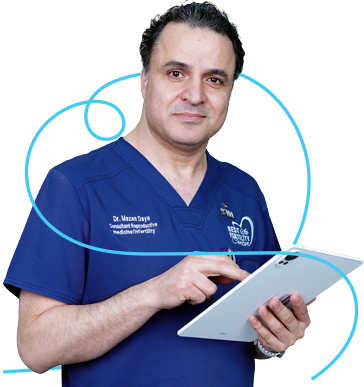
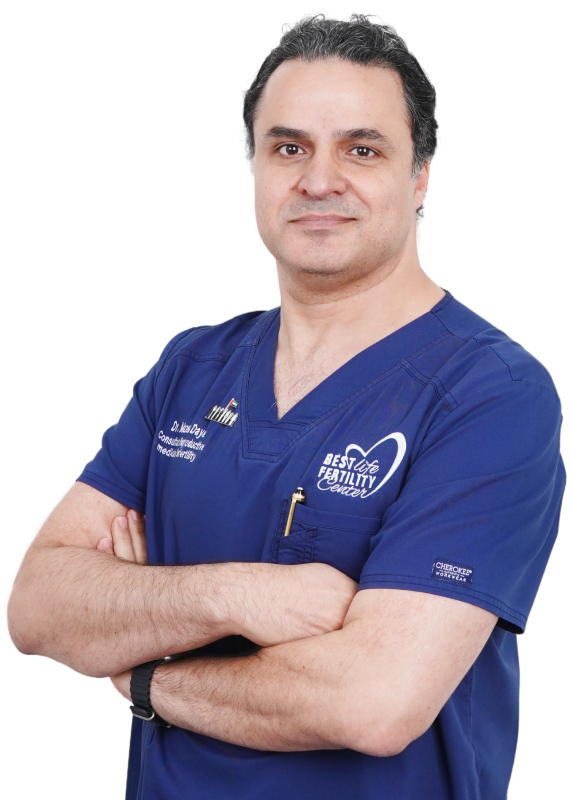
Best Life Fertility Centre serves patients from across the UAE and internationally, with a team that includes Dr. Mazen Dayeh (Medical Director, over 20 years in reproductive endocrinology), Dr. Carolina Arboleya (IVF Specialist, trained at Hospital Universitario La Paz, Madrid), and Dr. Mojgan Shafiei Shahidloo (IVF Lab Director, 25 years of specialist embryology experience).
Our approach is deliberately individualized. We do not apply the same stimulation protocol to every patient. We do not rush couples into IVF before simpler options have been considered. And we communicate clearly at every stage — because informed patients make better decisions and have better experiences.
The clinic holds EIAC accreditation, reflecting our commitment to clinical quality standards.
Conclusion
IVF is not a last resort — it is a well-established, evidence-based medical treatment that has helped millions of couples worldwide build their families. If you are considering fertility treatment in Dubai, the most important first step is a thorough, unhurried consultation with a specialist who takes time to understand your specific situation.
The path to parenthood looks different for every couple. What matters is having the right medical team beside you as you take it. At Best Life Fertility Centre, that is exactly what we offer.
Book a Consultation with Best Life Fertility Centre →
Frequently Asked Questions
Q: What is fertility treatment in Dubai, and where do I start?
Fertility treatment in Dubai begins with a specialist consultation and diagnostic tests for both partners, usually completed within one to two visits.
Q: How long does a full IVF cycle take from start to finish?
A complete cycle takes approximately four to six weeks, from the start of stimulation medication to the pregnancy blood test result.
Q: Is IVF the first treatment a doctor will recommend?
Not always. Many couples are offered less invasive options first. IVF is recommended when clinically indicated, not by default.
Q: Does age affect whether IVF will work for me?
Yes, significantly. IVF success rates are highest for women under 35 and gradually decline with age; your specialist will explain your personal outlook.
Q: Can IVF help if the fertility problem is on the male side?
Yes. ICSI, used alongside IVF/ICSI treatment, is specifically designed to overcome most forms of male factor infertility, including low sperm count and poor motility.