
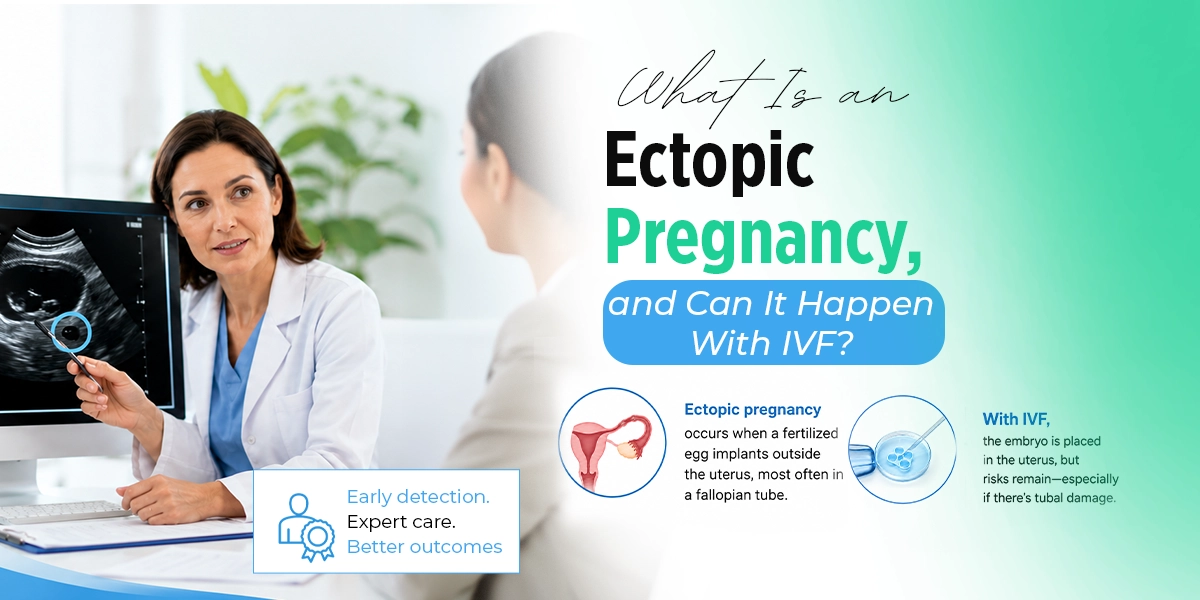
Quick Answer: An ectopic pregnancy happens when a fertilized egg implants outside the uterus — most often in a fallopian tube — instead of the uterine lining. Yes, ectopic pregnancy with IVF can still happen, even though the embryo is placed directly into the uterus during transfer. Studies suggest the incidence after IVF is somewhat higher than after natural conception, largely because many IVF patients already have underlying risk factors like tubal damage. It is not common, but it is a recognized possibility that fertility specialists actively screen for during early pregnancy monitoring.
Starting IVF often comes with a long list of questions, and one that quietly worries many patients is this: can an embryo placed directly in the uterus still end up in the wrong place? The short answer is yes — ectopic pregnancy with IVF is a known, if uncommon, complication. Understanding what it is, why it happens, and how it’s detected early can help you feel more informed and less anxious as you move through treatment. This article walks through the basics in plain language, without the medical jargon.
What Exactly Is an Ectopic Pregnancy?
An ectopic pregnancy occurs when a fertilized egg attaches somewhere other than the inner lining of the uterus. In the vast majority of cases, this happens inside a fallopian tube, which is why the term “tubal pregnancy” is often used interchangeably. Less commonly, implantation can occur in the ovary, cervix, or abdominal cavity.
Because these locations cannot support a growing pregnancy the way the uterus can, an ectopic pregnancy is not viable and requires prompt medical attention to protect the patient’s health.
Can Ectopic Pregnancy Happen With IVF?
This is where many patients are surprised. Even though an IVF embryo is transferred directly into the uterine cavity, it can still migrate into a fallopian tube before implanting. So yes — ectopic pregnancy with IVF is medically possible, and research indicates it may occur somewhat more frequently than in natural conception. This isn’t because the IVF procedure itself is unsafe; it’s largely tied to the underlying fertility issues many patients already have, such as scarred or damaged fallopian tubes.
Why Does Ectopic Pregnancy With IVF Occur More Often?
A few contributing factors are consistently highlighted in fertility research:
- Pre-existing tubal damage. Many patients turning to IVF do so because of blocked or scarred fallopian tubes — the same tissue damage that raises ectopic risk in natural conception too.
- Embryo migration. Even after a precise transfer, an embryo can move within the reproductive tract before implanting.
- Number of embryos transferred. Transferring more than one embryo has been associated with a modest increase in ectopic risk compared with a single embryo transfer.
- Hormonal environment. Stimulation protocols can subtly affect how the fallopian tubes and uterine lining behave during the implantation window.
- History of pelvic infection or previous ectopic pregnancy. Both are established risk factors independent of how conception occurs.
Recognizing the Symptoms Early
Because early ectopic pregnancy can feel similar to a normal early pregnancy, symptom awareness matters. Signs to watch for include:
- Sharp or persistent pain on one side of the lower abdomen or pelvis
- Vaginal bleeding or spotting that looks different from a typical period
- Pain in the shoulder tip (a sign of internal bleeding, requiring urgent care)
- Dizziness, fainting, or a rapid heartbeat
- Unusual gastrointestinal discomfort alongside pelvic pain
If any of these symptoms appear after a positive pregnancy test — whether from natural conception or after completing your IVF treatment process — contact your fertility team immediately rather than waiting for your next scheduled appointment.
How Is It Diagnosed and Monitored During IVF?
One advantage of conceiving through IVF is that patients are already closely monitored from the very start. Fertility clinics typically track early pregnancy through:
- Serial beta-hCG blood tests to confirm the hormone is rising appropriately.
- Early transvaginal ultrasound, usually around 5–6 weeks, to confirm the pregnancy is located inside the uterus.
- Close follow-up scans if hCG levels rise more slowly than expected or if a patient has known risk factors.
This structured monitoring is one reason ectopic pregnancies are often caught earlier in IVF patients than in unmonitored natural conceptions. Clinics offering ICSI treatment alongside standard IVF typically follow the same early monitoring protocol regardless of fertilization method.
How Is an Ectopic Pregnancy With IVF Treated?
Treatment depends on how early it’s caught and whether the pregnancy has ruptured:
- Medication (methotrexate): Used for early, unruptured ectopic pregnancies to stop cell growth and allow the body to reabsorb the tissue.
- Laparoscopic surgery: Recommended when the pregnancy is more advanced, if there’s a risk of rupture, or if medication isn’t suitable.
- Emergency surgery: Required in the rare case of a ruptured ectopic pregnancy, which is a medical emergency due to internal bleeding.
The right approach is always decided case-by-case, based on hCG trends, ultrasound findings, and the patient’s overall health.
Does an Ectopic Pregnancy Affect Future IVF Success?
This is one of the most common follow-up concerns. A single ectopic pregnancy does not mean future IVF cycles are doomed to repeat it. Many patients go on to have successful, uterus-based pregnancies afterward, especially with close monitoring in subsequent cycles. According to an overview published by the Mayo Clinic, most people who experience one ectopic pregnancy can still go on to have healthy pregnancies in the future, though individual risk factors should always be discussed with a specialist. Working closely with fertility specialists in Dubai who understand your specific history allows your next transfer to be planned with extra precautions if needed.
Conclusion
To sum it up: ectopic pregnancy with IVF is uncommon but real, and it’s almost always linked to pre-existing risk factors rather than the IVF procedure itself. The good news is that IVF patients are already under close medical observation from the earliest days of pregnancy, which means ectopic pregnancies are frequently caught before they become dangerous. If you have a history of tubal issues, a previous ectopic pregnancy, or simply want personalized guidance before your next cycle, it’s worth talking it through with a specialist. Schedule a consultation with our team to discuss your individual risk factors and monitoring plan.
Frequently Asked Questions
1. Is ectopic pregnancy more common with IVF than natural conception?
Research suggests the rate is somewhat higher with IVF, mainly because many patients already have tubal or pelvic risk factors, not because of the IVF procedure itself.
2. Can an ectopic pregnancy be detected with a home pregnancy test?
No. A home test only confirms pregnancy hormone presence, not location. Ultrasound and blood tests are needed to confirm whether the pregnancy is in the uterus.
3. How early can doctors detect an ectopic pregnancy after IVF?
Typically around 5–6 weeks via early ultrasound, combined with beta-hCG blood tracking, since IVF patients are monitored more closely from the start.
4. Can you have a healthy pregnancy after an ectopic pregnancy from IVF?
Yes, many patients go on to conceive successfully afterward, especially with closer monitoring and any recommended precautions in future embryo transfers.
5. Does transferring one embryo instead of two lower the risk of ectopic pregnancy?
Generally, yes. Single embryo transfer has been associated with a slightly lower ectopic pregnancy risk compared with transferring multiple embryos at once.