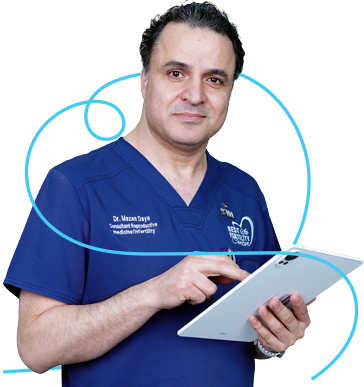
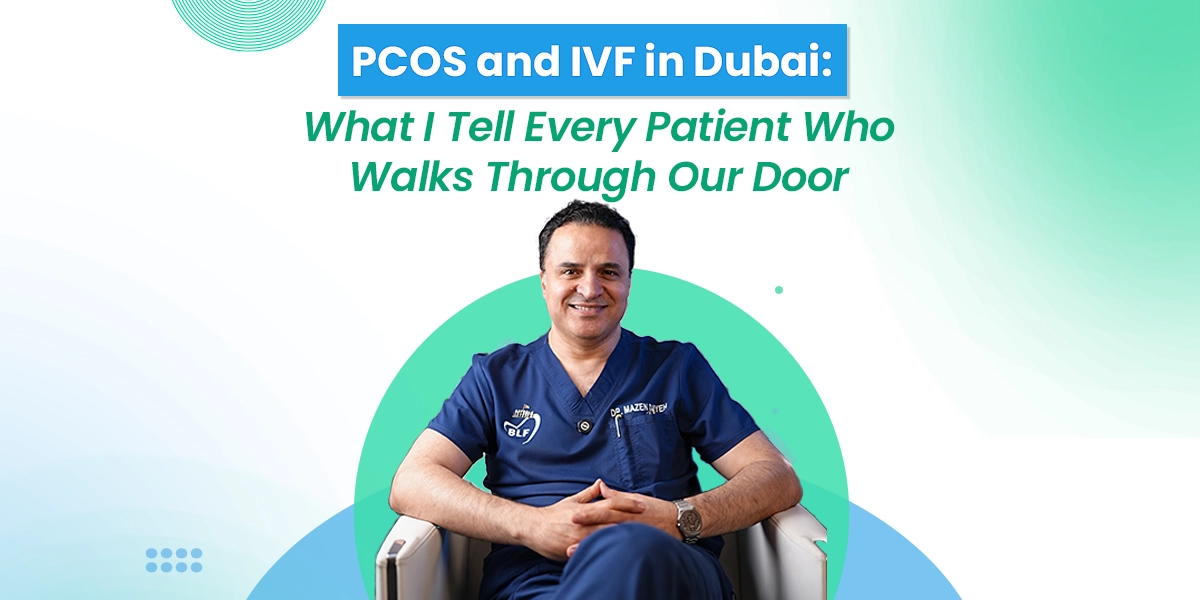
After two decades treating fertility patients in the UAE, I’ve had this conversation hundreds of times. This is the honest, unfiltered version of it — the things that matter, the things that are often misunderstood, and what we actually do in our clinic to help women with PCOS become mothers.
Let me start with something I wish more clinics said openly: PCOS is not a death sentence for your fertility. I’ve seen that phrase cause unnecessary panic in patients who come to us after spending hours reading about their diagnosis online. The picture the internet often paints is either falsely reassuring (“just lose a little weight!”) or needlessly frightening (“your ovaries are damaged”). Neither is accurate.
What PCOS actually means for your fertility journey is more nuanced — and, in many ways,
more hopeful — than most people realise. The condition brings specific challenges, yes. But it also brings something that works in your favour during IVF that I’ll explain shortly.
I’m writing this guide because I want every woman who comes to us at Best Life Fertility with a PCOS diagnosis to understand exactly what they’re dealing with before we even begin
treatment. Knowledge changes everything in fertility care. Patients who understand their
diagnosis ask better questions, make more informed decisions, and — I genuinely believe —
tend to cope with the emotional side of the journey better too.
1 in 10 Women of reproductive age have PCOS — it is the most common hormonal disorder in the UAE ~60% Live birth rate per IVF cycle for PCOS patients under 35 at experienced Dubai clinics
#1 PCOS is the leading cause of anovulatory infertility (failure to ovulate) in women worldwide |
What PCOS Actually Means for Your Fertility?
Polycystic Ovary Syndrome is a hormonal condition that disrupts ovulation — the release of a mature egg from the ovary each month. In a woman with PCOS, the ovaries tend to produce excess androgens (male hormones like testosterone), which interferes with the normal follicle development cycle. Instead of one follicle maturing and releasing an egg, multiple follicles begin to develop but stall — forming the small cysts visible on an ultrasound that give PCOS its name.
The result is irregular or completely absent ovulation. And since pregnancy requires ovulation, this is where the fertility challenge comes from. It is not that the eggs are necessarily damaged or the uterus is incapable — it is that the system that delivers an egg each month is not working reliably.
From Dr. Mazen’s Clinical Experience
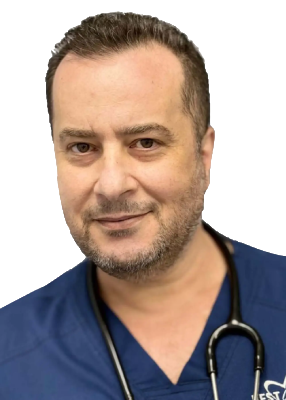
— Dr. Mazen Dayeh, Reproductive Medicine and Infertility Consultant, Best Life Fertility Centre |
PCOS is also heavily influenced by metabolic health. Approximately 70% of women with PCOS have some degree of insulin resistance — a condition in which the body’s cells don’t respond properly to insulin. This disrupts hormone signalling and can worsen androgen production, making ovulation even less reliable. It also affects egg quality in ways that are important for IVF outcomes.
Common signs that bring women to our clinic include:
PCOS Symptoms That Commonly Affect Fertility
– Irregular periods or no periods at all — cycles longer than 35 days, or fewer than 8 periods per year, are a clear signal
– Elevated androgens — showing up as facial hair, acne, or thinning hair on the scalp, confirmed by blood tests showing raised testosterone or DHEAS
– Polycystic ovaries on ultrasound — 20 or more small follicles visible per ovary (the Rotterdam Criteria threshold)
– Insulin resistance symptoms — weight gain particularly around the abdomen, difficulty losing weight, fatigue after meals, or a family history of Type 2 diabetes
– Elevated AMH — while high AMH sounds like good news (it means more follicles), levels above 5–6 ng/mL in a PCOS context also signal a high risk of ovarian hyperstimulation during IVF
The Part Nobody Mentions: Why PCOS Patients Often Do Well in IVF
Here is the thing that often surprises patients when I tell them: women with PCOS frequently produce more eggs during an IVF stimulation cycle than the average patient. Sometimes significantly more. This is because the same characteristic that causes the problem — the large number of antral follicles sitting dormant in the PCOS ovary — becomes an advantage when we add controlled stimulation.
We are essentially working with a larger reservoir. A woman without PCOS might produce 6 to 10 mature eggs in a retrieval cycle. A woman with PCOS might produce 12, 15, or even 20 or more.
From Dr. Mazen’s Clinical Experience
— Dr. Mazen Dayeh |
The Risk You Must Understand: OHSS
I am going to be direct here because I think patients deserve honesty about this. Ovarian Hyperstimulation Syndrome (OHSS) is the most serious risk in IVF for women with PCOS, and it is the main reason that experience and protocol matter so much when choosing a clinic.
OHSS happens when the ovaries overrespond to stimulation hormones — producing so many follicles that fluid leaks from blood vessels into the abdomen and sometimes the chest. Mild OHSS (bloating, discomfort, some weight gain) is common and manageable.
Severe OHSS — which causes significant fluid accumulation, blood clots, and sometimes hospitalisation — is rare but serious, and it is significantly more likely in PCOS patients than in the general IVF population.
Honest Numbers on OHSS Risk in PCOS Without proper precautions, mild-to-moderate OHSS affects up to 30–40% of PCOS patients during stimulation. Severe OHSS affects around 1–5% of cases overall — but this rate climbs significantly in untreated or poorly monitored PCOS cycles. With modern prevention protocols — which we use as standard in our clinic — the rate of severe OHSS is now very low. But “low” is not “zero,” and any clinic that tells you there is no risk is not being honest with you. What we do at Best Life Fertility to prevent OHSS in PCOS patients specifically: |
Our OHSS Prevention Protocol for PCOS Patients
✔ Low-and-slow stimulation — we start at 75–100 IU of FSH (significantly lower than standard doses) and increase carefully based on ultrasound response every 2–3 days
✔ GnRH agonist trigger instead of hCG — this trigger shot change alone is one of the most effective OHSS prevention tools we have. It carries a slightly shorter window, which is why monitoring timing precisely matters
✔ Freeze-all embryo strategy — we freeze all viable embryos and do not do a fresh transfer in the same cycle. This allows hormone levels to normalise before the uterus receives an embryo — and actually improves implantation rates in PCOS patients
✔ Metformin pre-treatment — for patients with confirmed insulin resistance, we often start metformin 6–8 weeks before the cycle, which has been shown to reduce OHSS risk and improve egg quality
✔ Cabergoline if needed — a medication that directly reduces vascular permeability (the mechanism of OHSS fluid leakage), given after trigger in higher-risk cases
Realistic Success Rates for PCOS Patients in Dubai
I want to give you honest numbers here — not the optimistic figures clinics sometimes advertise, and not the pessimistic ones you might find on forums. Success rates in IVF depend on age more than almost any other single factor. For PCOS patients specifically, egg quantity is usually strong — the variable is egg quality, which is influenced by age, insulin resistance, and BMI. Here is what we typically see at our clinic and what the published literature supports:
Patient Age | Typical Eggs Retrieved | Blastocyst Rate | Clinical Pregnancy Rate / Transfer | Live Birth Rate (Approx.) |
Under 33 | 12–22 eggs | 50–60% | 60–70% | 50–60% |
33–36 | 10–18 eggs | 45–55% | 50–62% | 42–52% |
37–39 | 8–15 eggs | 38–48% | 38–52% | 30–42% |
40–42 | 6–12 eggs | 28–40% | 28–40% | 20–32% |
These are indicative ranges based on published clinical data and UAE clinic outcomes. Individual results vary significantly. PGT-A genetic testing can shift these figures by eliminating chromosomally abnormal embryos from transfer. |
One important note: these figures are per transfer, not per full cycle. Because PCOS patients often produce multiple embryos from a single retrieval, the cumulative pregnancy rate across multiple frozen transfers from one retrieval is often considerably higher than any single transfer rate suggests.
Patient Experience (anonymised, shared with consent)
A 36-year-old patient came to us after two failed IVF cycles at another clinic in Dubai. She had PCOS with significant insulin resistance and a BMI of 31. In her previous cycles, no one had addressed her metabolic health before stimulation — she had simply been given standard protocols and experienced moderate OHSS both times, resulting in poor embryo quality.
At our clinic, we spent three months working on her health first: metformin, a dietary overhaul focused on reducing her glycaemic load, and moderate daily walking. She lost 6kg. Her fasting insulin dropped significantly. When we started her IVF cycle, she responded more calmly to stimulation, produced 11 mature eggs, and we got 5 blastocysts — all 5 were viable after freezing. Her first frozen embryo transfer worked. “I wish someone had told me two cycles ago that fixing my insulin resistance would change everything,” she said at her 10-week scan.
Not every story unfolds this neatly. But it illustrates something I believe strongly: in PCOS, the preparation matters as much as the procedure.
Your IVF Journey with PCOS: What to Expect at Each Stage
Before the Cycle: Optimisation (4–12 Weeks)
This stage is unique to PCOS patients and often skipped at clinics that are in a rush to start treatment. At Best Life Fertility, we invest time here because the evidence is clear: optimising metabolic health before stimulation improves both egg quality and OHSS risk profile. This includes a complete hormonal panel, fasting insulin and glucose testing, ultrasound assessment of your antral follicle count, nutritional guidance, and in appropriate cases, a 6–12 week course of metformin.
Stimulation Phase (8–14 Days)
You will self-administer daily hormone injections (FSH, with or without LH) to encourage multiple follicles to grow. For PCOS patients, we begin at a lower dose than standard and monitor you closely with ultrasound and blood oestrogen measurements every 2–3 days. The goal is steady, controlled follicle growth — we are trying to bring 10–15 follicles to maturity, not all 20 that might be visible on your scan. Discipline in monitoring at this stage is what prevents OHSS.
Trigger and Egg Retrieval
When your leading follicles reach 17–18mm, you’ll receive your trigger shot. For PCOS, this is almost always a GnRH agonist trigger (not hCG) — a decision that significantly lowers your OHSS risk. Egg retrieval takes place 34–36 hours later under light sedation. Most patients go home the same day with mild discomfort for 1–2 days.
Fertilisation and Embryo Culture (Days 1–6 after retrieval)
Retrieved eggs are fertilised using ICSI in our laboratory — a single sperm is injected into each mature egg. Embryos are cultured for 5–6 days to the blastocyst stage. Not all eggs fertilise, and not all embryos reach blastocyst — this is normal. We provide daily updates during this phase so you always know what is happening.
Freeze-All and Waiting
All viable blastocysts are vitrified (flash-frozen) and stored. This is the standard approach for PCOS patients. No fresh transfer in the same cycle. This is not bad news — a frozen embryo transfer in a subsequent natural or medicated cycle typically has equal or better implantation rates than a fresh transfer in a hormonally stimulated environment. You’ll have 4–8 weeks before your frozen embryo transfer cycle begins.
Frozen Embryo Transfer (FET)
This is the stage where pregnancy begins. A single embryo (we strongly advocate single embryo transfer to reduce the risks of twins in PCOS patients, who already have a heightened multiple pregnancy risk) is transferred into the uterus via a thin catheter. The procedure takes about 10 minutes, requires no sedation, and is often described by patients as no more uncomfortable than a smear test. A blood pregnancy test follows 12–14 days later.
What Does IVF for PCOS Cost in Dubai in 2026?
I’ll be transparent about this because I know it’s one of the first questions on everyone’s mind, and vague answers frustrate people.
Component | Approx. Cost (AED) | Notes for PCOS Patients |
IVF / ICSI Base Cycle | 20,000 – 28,000 | Includes retrieval, lab work, basic monitoring |
Hormonal Medications | 3,500 – 8,000 | PCOS patients often use lower doses; can be less than average |
Embryo Vitrification (Freezing) | 2,000 – 4,000 | Always recommended for PCOS; included in some packages |
Annual Embryo Storage | 1,500 – 3,000 | Per year |
Frozen Embryo Transfer (FET) | 5,000 – 9,000 | Separate cycle cost after retrieval |
PGT-A Genetic Testing | 8,000 – 16,000 | Optional but valuable, especially over 35 |
Pre-cycle Bloods & Scans | 800 – 1,800 | Often partially covered by insurance |
A typical complete first cycle for a PCOS patient — including stimulation, retrieval, freezing, and one frozen embryo transfer — generally falls in the range of AED 32,000 to 48,000 at our clinic, depending on medication response and whether genetic testing is added.
We always provide a written, itemised cost estimate before anything begins. There are no surprises, and we offer flexible payment arrangements. Basic UAE health insurance does not typically cover IVF, though some enhanced corporate plans from providers like Daman offer partial coverage.
What You Can Do Before Your First Appointment
From Dr. Mazen’s Clinical Experience
— Dr. Mazen Dayeh |
Evidence-Based Steps to Take Right Now
✔ Reduce refined carbohydrates and sugar — a low glycaemic index diet is the single most well-supported dietary intervention for PCOS. It directly addresses insulin resistance, the root hormonal driver of the condition. You do not need to be perfect; you need to be consistent.
✔ Walk 30 minutes daily — this is not about weight loss primarily (though that helps too). Regular moderate exercise improves insulin sensitivity measurably within 4–6 weeks. Avoid very intense exercise during your actual stimulation cycle, but before that, move.
✔ Ask your GP about myo-inositol — this supplement has the strongest evidence base of any supplement for PCOS fertility. A typical dose is 2–4g of myo-inositol plus 200mcg of D-chiro-inositol daily. Ask before starting — your fertility specialist will confirm whether it’s appropriate for you.
✔ Get your Vitamin D checked — deficiency is extremely common in the UAE (ironically, given the climate — most people avoid the sun). Vitamin D deficiency is associated with worse IVF outcomes and is easy and cheap to correct.
✔ Collect your previous medical records — any hormonal blood tests, ultrasounds, or previous fertility investigations. The more we know when you walk in, the faster we can form a plan.
✔ Find a stress management practice that works for you — not because stress “causes” infertility (this is often said carelessly), but because the IVF journey is emotionally demanding and having a practice already in place makes a real difference to how you experience it.
When Should You Book a Consultation?
If you have PCOS and are trying to conceive, my honest recommendation on timing:
When to Seek a Fertility Consultation
🔴 Immediately — if you are 35 or older with PCOS, do not wait. Egg quality declines with age, and time genuinely matters.
🟡 After 6 months of trying — if you are under 35 but have irregular or absent periods. If you are not ovulating, natural conception is close to impossible regardless of how long you try.
🟡 After 12 months of trying — if you are under 35 and your cycles are regular (which is less
common in PCOS but does occur).
🟢 Whenever you want clarity — you do not need to have been trying for any specific length of time to come in for a fertility assessment. If you have PCOS and want to understand your fertility status, a consultation is always worthwhile.
Frequently Asked Questions
1. Is PCOS the reason I can't get pregnant, or could there be something else?
While PCOS can impact your fertility, other potential causes of infertility include the quality of sperm, blockages in your fallopian tubes, hormonal problems such as thyroid disease, or any number of conditions affecting your uterus
2. Can I try IUI before IVF if I have PCOS?
By recommendation, IUI with ovulatory drugs is typically the first step for those PCOS patients who have evidence of normal fallopian tubes and good-quality sperm; these types of patients are often candidates for IVF afterwards.
3. Do I need to lose weight before I can start IVF for PCOS?
While weight loss is not required, a loss of 5 to 10 percent of your total body weight may lead to better quality eggs, a better hormonal balance between progesterone and estrogen, better chances of successful implantation of the embryo, and higher success rates with IVF!
4. Does PCOS affect my pregnancy once I conceive through IVF?
Pregnancy-related complications having to do with PCOS may increase some issues; for example, there may be a slight increase in the risk for gestational diabetes, hypertension and/or miscarriage; however, with the appropriate medical supervision and prenatal care, all of these risks can be effectively managed.
5. Is IVF for PCOS covered by insurance in Dubai?
Most basic UAE health insurance plans will not cover the costs of IVF services; however, some plans will provide partial coverage for fertility assessment and selected infertility treatment.