PCOS — Polycystic Ovary Syndrome — is the most common hormonal condition affecting women of reproductive age, and one of the most frequent reasons couples struggle to conceive. If you’ve recently been diagnosed, or if you’ve been managing PCOS for years and are now ready to start a family, understanding your options is the most important first step you can take.
The good news is that fertility treatments for women with PCOS have advanced considerably, and the vast majority of women with this condition do go on to have successful pregnancies with the right support. At Best Life Fertility Centre in Dubai, we work with PCOS patients at every stage — from those who simply need ovulation support to those requiring full IVF with a PCOS-specific protocol.
This guide covers everything you need to know: how PCOS affects your ability to conceive, which treatments work and in what order, and what to expect at each stage of your journey.
How PCOS Interferes with Conception?
To understand the treatment options, it helps to first understand what’s actually happening in the body.
In a typical menstrual cycle, one dominant follicle develops, matures, and releases an egg — a process called ovulation. In PCOS, this process is disrupted by a combination of factors: elevated androgens (male hormones), insulin resistance, and irregular signalling from the brain to the ovaries. Multiple small follicles begin to develop but none reach maturity, ovulation doesn’t occur, and the cycle becomes irregular or absent.
Importantly, women with PCOS almost always have a healthy — often abundant — egg supply. The challenge isn’t egg quantity. It’s getting those eggs to ovulate reliably. This is why PCOS-related infertility responds so well to targeted treatment.
The Treatment Ladder: From Lifestyle to IVF
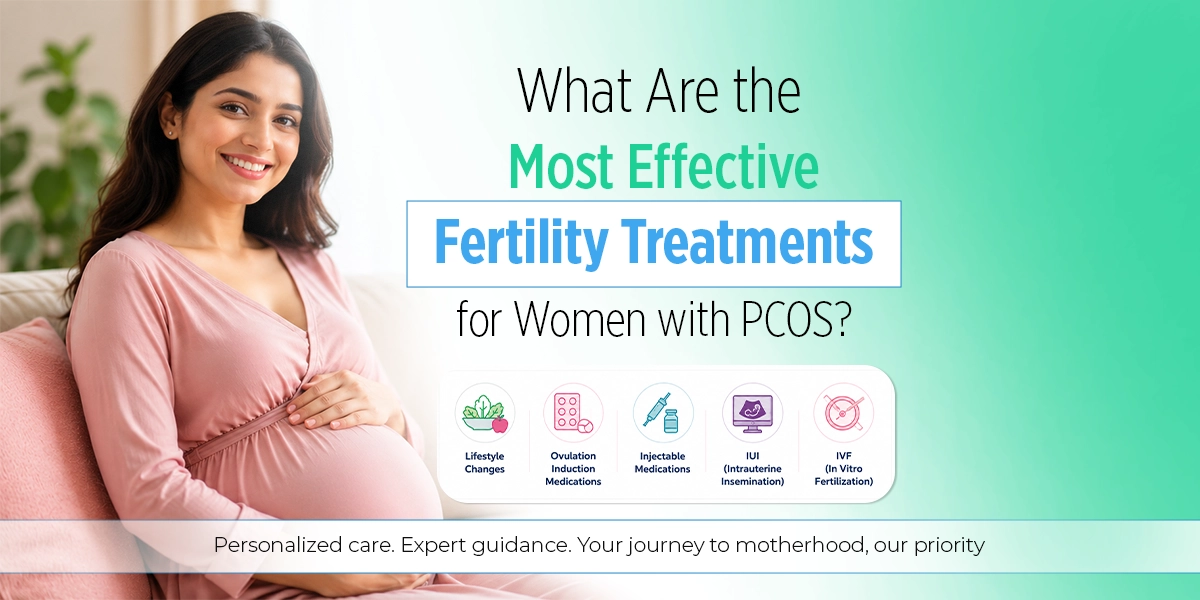
Fertility care for PCOS is not one-size-fits-all. Specialists generally follow a stepwise approach, starting with the least invasive option and progressing based on response. Here is how that pathway typically looks.
1. Lifestyle Optimisation
For women with PCOS who are overweight or show signs of insulin resistance, targeted lifestyle changes are not a consolation prize — they are a medically proven first-line intervention.
Research consistently shows that losing 5–10% of body weight can restore spontaneous ovulation in women with PCOS who carry excess weight. The mechanism is straightforward: reducing body fat lowers circulating insulin, which reduces the androgen overproduction that suppresses ovulation.
A low-glycaemic diet — built around whole grains, lean proteins, legumes, and non-starchy vegetables — helps regulate blood sugar and reduce the hormonal disruption that drives PCOS symptoms. Processed foods, refined carbohydrates, and added sugars are the main dietary factors to limit.
Consistent moderate exercise, around 150 minutes per week, improves insulin sensitivity significantly. Both aerobic activity (walking, cycling, swimming) and resistance training have shown measurable hormonal benefits in clinical studies.
For women with a healthy BMI, lifestyle work shifts focus to stress management, sleep quality, and reducing systemic inflammation — all of which support hormonal balance and cycle regularity.
At Best Life Fertility Centre, nutritional and lifestyle guidance is embedded into every PCOS treatment plan from day one.
2. Ovulation Induction with Letrozole
When lifestyle changes alone don’t restore regular ovulation within a few months — or when age or other factors make waiting inadvisable — the next step is ovulation induction with medication.
Letrozole is currently the gold-standard first-line medication for PCOS-related infertility, having demonstrated higher live birth rates than Clomiphene Citrate (Clomid) in well-designed clinical trials. It works by temporarily reducing oestrogen levels, prompting the pituitary gland to release more FSH and stimulate the ovaries to develop and release a mature egg.
Letrozole is taken orally for five days early in the menstrual cycle. Ovulation is confirmed through ultrasound monitoring, which also helps time intercourse or insemination accurately.
Ovulation occurs in approximately 60–85% of cycles with letrozole. Cumulative pregnancy rates over multiple cycles, particularly when combined with IUI, can reach 27–30%.
Metformin — an insulin-sensitising medication — is frequently prescribed alongside letrozole for women with confirmed insulin resistance. It can improve ovulatory response and reduce miscarriage risk in PCOS patients.
3. Intrauterine Insemination (IUI)
IUI is often recommended after three to four unsuccessful letrozole cycles, or earlier when a mild sperm factor is also present. The procedure involves placing a concentrated sample of prepared sperm directly into the uterus at the time of ovulation, improving the odds of fertilisation without the complexity of IVF.
It is typically combined with ovulation induction — either letrozole or low-dose injectable hormones — to ensure ovulation is occurring and well-timed.
Per-cycle success rates with IUI in PCOS sit between 10–20%, and many women achieve pregnancy within three to six IUI cycles when other factors are normal.
4. Injectable Gonadotropins
For women who don’t respond to oral medications, injectable FSH or combined FSH/LH preparations offer stronger, more direct ovarian stimulation.
Because PCOS ovaries are often highly sensitive, gonadotropin cycles require careful monitoring through frequent ultrasound scans and blood oestrogen measurements. The “low and slow” protocol — beginning at the lowest effective dose and titrating upward gradually — significantly reduces the risk of ovarian hyperstimulation syndrome (OHSS) while still triggering ovulation reliably.
Gonadotropin-stimulated cycles are typically combined with IUI or timed intercourse.
5. IVF with a PCOS-Specific Protocol
When earlier interventions haven’t resulted in pregnancy, or when additional factors such as tubal damage, severe male factor infertility, or the need for genetic screening are present, IVF offers the highest per-cycle pregnancy rates of any available option.
In IVF, the ovaries are stimulated to produce multiple eggs, which are retrieved, fertilised in the laboratory, and transferred back to the uterus as a developed embryo.
For PCOS patients, the IVF protocol is adapted in several key ways to maximise safety and success:
OHSS prevention is the priority. Women with PCOS have a higher risk of OHSS due to their large antral follicle count and sensitivity to stimulation. Clinics experienced in PCOS use GnRH antagonist stimulation protocols, which allow a GnRH agonist trigger shot instead of HCG — dramatically reducing OHSS risk. This is considered best practice for all PCOS IVF cycles.
Freeze-all strategy. Rather than transferring a fresh embryo in the same cycle as egg retrieval, all embryos are cryopreserved and transferred in a subsequent natural or medicated cycle. This gives the body time to recover from stimulation, eliminates OHSS risk from the transfer itself, and has been shown in multiple randomised trials to produce better pregnancy outcomes in PCOS patients than fresh transfers.
Metformin pre-treatment. Starting Metformin four to eight weeks before stimulation has been shown to reduce OHSS incidence and improve embryo quality in PCOS patients.
Individualised stimulation dosing. Dosing is never standardised. It is calculated from each patient’s antral follicle count, AMH level, BMI, and previous ovarian response history.
At Best Life Fertility Centre, every PCOS IVF cycle is managed with this level of precision. Our team monitors closely throughout stimulation and adjusts protocols in real time based on your response.
6. Laparoscopic Ovarian Drilling (LOD)
Laparoscopic ovarian drilling is a minor surgical option for women who have not responded to medication. Small punctures are made in the outer surface of each ovary using laser or diathermy energy, reducing androgen-producing tissue and often restoring spontaneous ovulation for 12–24 months.
LOD is not a first-line recommendation and is considered selectively — typically for women who prefer to avoid ongoing medication cycles or for whom gonadotropin stimulation carries an unacceptably high OHSS risk.
Conditions That Must Be Screened and Treated Alongside PCOS
A complete approach to fertility treatments for women with PCOS includes identifying and addressing other conditions that commonly co-occur and independently affect fertility:
Thyroid dysfunction is significantly more prevalent in women with PCOS. Both underactive and overactive thyroid impair ovulation and early pregnancy. TSH levels should be optimised before any fertility treatment begins.
Elevated prolactin can suppress ovulation and is more common in PCOS. If raised, it can be treated effectively with medication before pursuing fertility intervention.
Endometrial health requires monitoring. Infrequent cycles mean the endometrial lining may not shed regularly, increasing the long-term risk of endometrial hyperplasia. Hormonal management of the cycle is part of responsible PCOS care even outside active fertility treatment.
Vitamin D deficiency is highly prevalent in the UAE population and has been linked to impaired insulin sensitivity and reduced fertility in PCOS. Supplementation is often recommended where levels are low.
Emotional Wellbeing: An Integral Part of PCOS Fertility Care
Living with PCOS — particularly when fertility is a concern — carries a documented psychological burden. Studies show significantly higher rates of anxiety and depression among women with PCOS compared to the general population, and these are compounded by the stress of fertility treatment itself.
At Best Life Fertility Centre, emotional support is woven into care, not offered as an afterthought. We provide access to counselling, patient education resources, and a team that takes time to explain every step. We’ve found that patients who feel genuinely informed and supported through the process have better experiences and, in many cases, better outcomes.
Treatment Options at a Glance
| Treatment | Who It’s For | Key Consideration |
|---|---|---|
| Lifestyle optimisation | All PCOS patients | Essential baseline for everyone |
| Letrozole ± Metformin | First-line ovulation induction | Preferred over Clomid in PCOS |
| IUI | After 3–4 failed medication cycles | Works best when tubes are clear |
| Injectable gonadotropins | Letrozole non-responders | Needs careful monitoring |
| IVF with PCOS protocol | Failed prior treatments or additional factors | Freeze-all recommended |
| Laparoscopic ovarian drilling | Medication-resistant, surgical preference | Selective use only |
Why Patients Choose Best Life Fertility Centre
Best Life Fertility Centre, located in the UAE, is a dedicated fertility clinic with extensive experience managing PCOS across the full spectrum of severity — from patients seeking their first ovulation induction cycle to those arriving after failed treatment elsewhere.
Our medical team combines detailed hormonal assessment, personalised protocol design, and careful monitoring with a genuine commitment to patient experience. We don’t rush through consultations, and we don’t apply generic protocols to complex cases.
If PCOS is standing between you and the family you want to build, we’d like to help you understand exactly what your options are and what the most realistic path forward looks like for your individual situation.
Book a consultation at Best Life Fertility Centre →
Conclusion
PCOS is one of the most common causes of infertility — but it is also one of the most treatable. From targeted lifestyle changes and oral medications to IUI, injectables, and IVF with a PCOS-tailored protocol, fertility treatments for women with PCOS have never been more effective or more refined.
The key is working with a team that understands the condition deeply and builds your care plan around your specific hormonal profile, not a standard protocol. Whether you’re just beginning to think about conception or have already been navigating this for some time, getting the right assessment is the most valuable thing you can do next.
At Best Life Fertility Centre in Dubai, we’re here to provide exactly that — expert, personalised, compassionate care designed to give you the best possible chance of becoming a parent.
Frequently Asked Questions
Can women with PCOS get pregnant without treatment?
Yes. Many women with PCOS conceive naturally, especially with lifestyle improvements that restore regular ovulation and support hormonal balance.
What is the most effective fertility treatment for PCOS?
Letrozole is the proven first-line option. For those needing more support, IVF with a PCOS-specific protocol offers the highest success rates.
Does IVF work well for women with PCOS?
Yes. With a properly adapted protocol including GnRH antagonist stimulation and a freeze-all strategy, IVF outcomes for PCOS patients are excellent.
How many IUI cycles are recommended before moving to IVF?
Most specialists suggest three to six IUI cycles before progressing to IVF, depending on the patient’s age and other clinical factors.
Is OHSS a serious risk during IVF for PCOS?
The risk is higher in PCOS, but modern protocols — low-dose stimulation, GnRH agonist trigger, and freeze-all embryo transfer — have made severe OHSS uncommon in experienced fertility centres.